GC-R8
Custom Control Systems
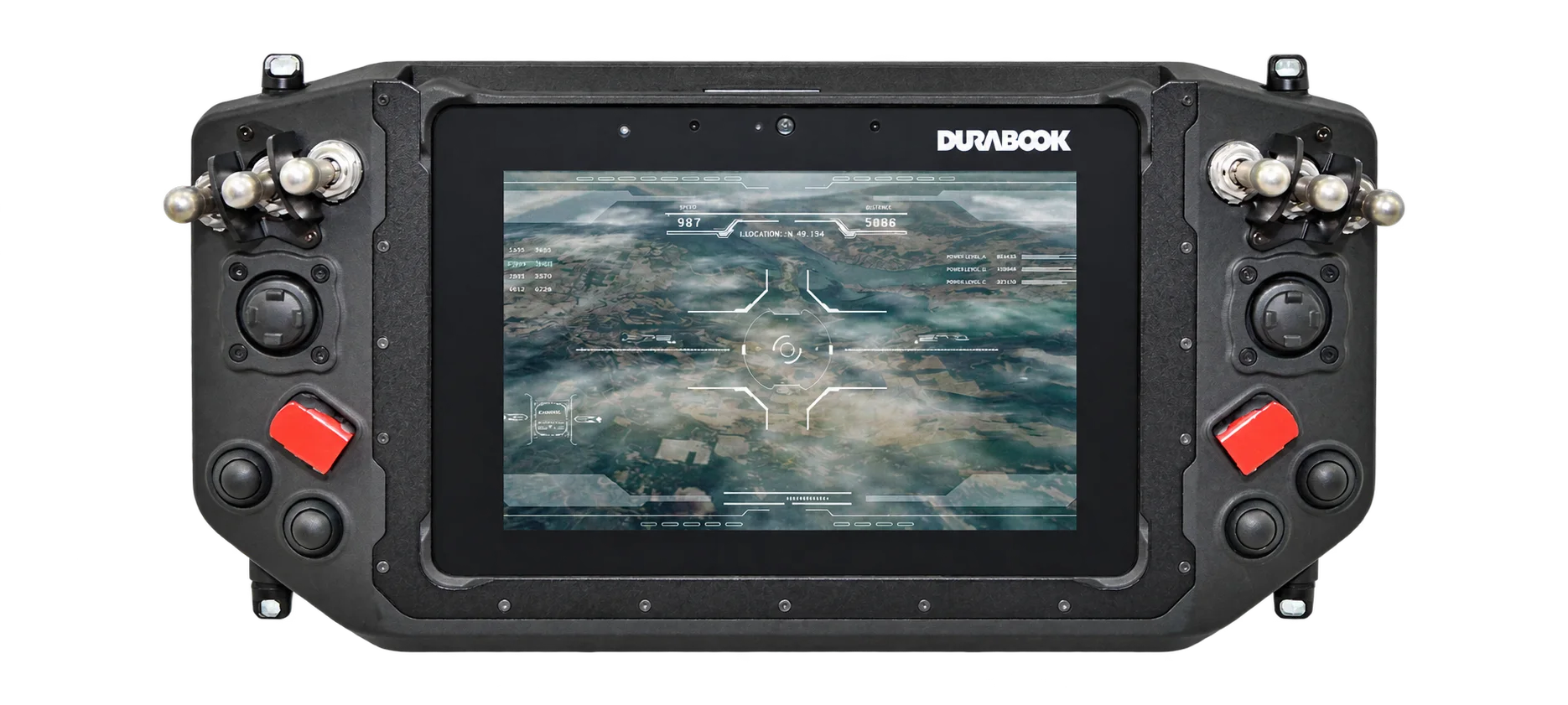
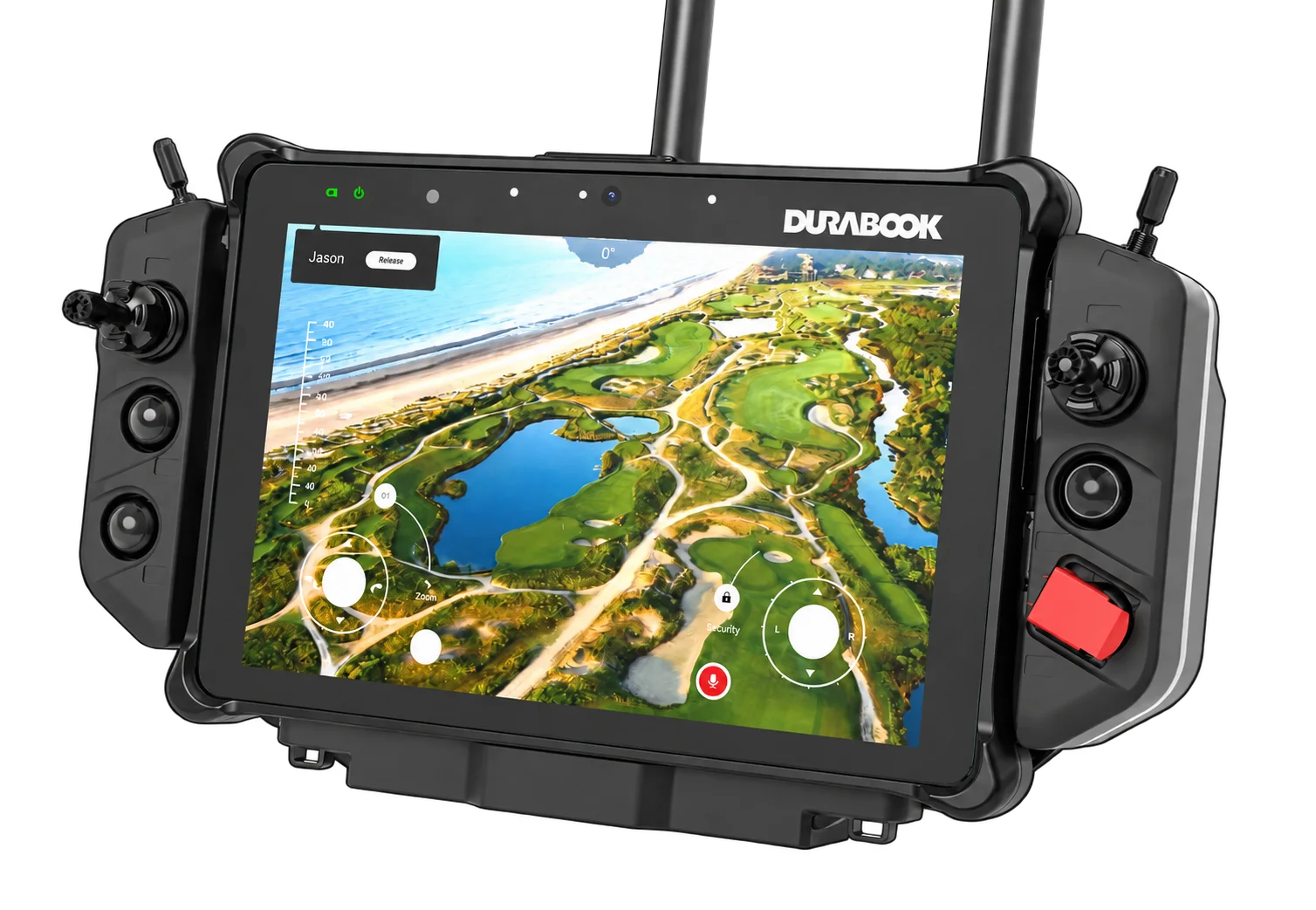
Durabook combines rugged tablet and laptop computing with physical controls tailored to the operator’s tasks.
Configurable joysticks, switches and assignable buttons support the application and connected equipment.

DURABOOK GROUND CONTROL SOLUTIONS
Combining rugged computing with open architecture communications and configurable controls, Durabook ground control stations can be custom-built for your operation.
CUSTOM GROUND CONTROL
01 / 04Durabook combines rugged tablet and laptop computing with physical controls tailored to the operator’s tasks.
Configurable joysticks, switches and assignable buttons support the application and connected equipment.
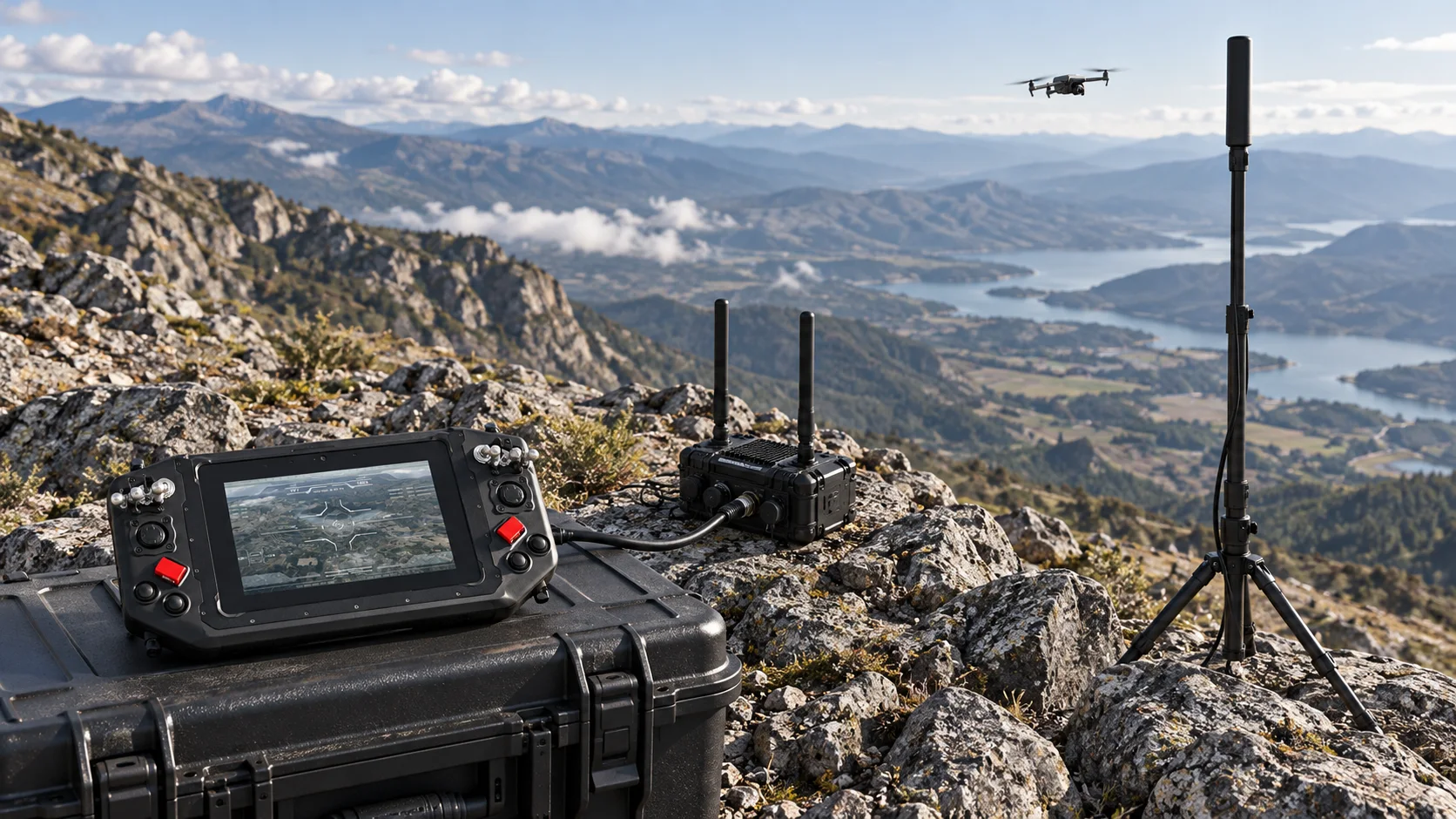
Data links connect field operators, unmanned systems and command-center equipment.
Options include Wi-Fi, cellular networks, satellite backhaul through a separate terminal, and third-party RF modules. The connection arrangement reflects the application and deployment.
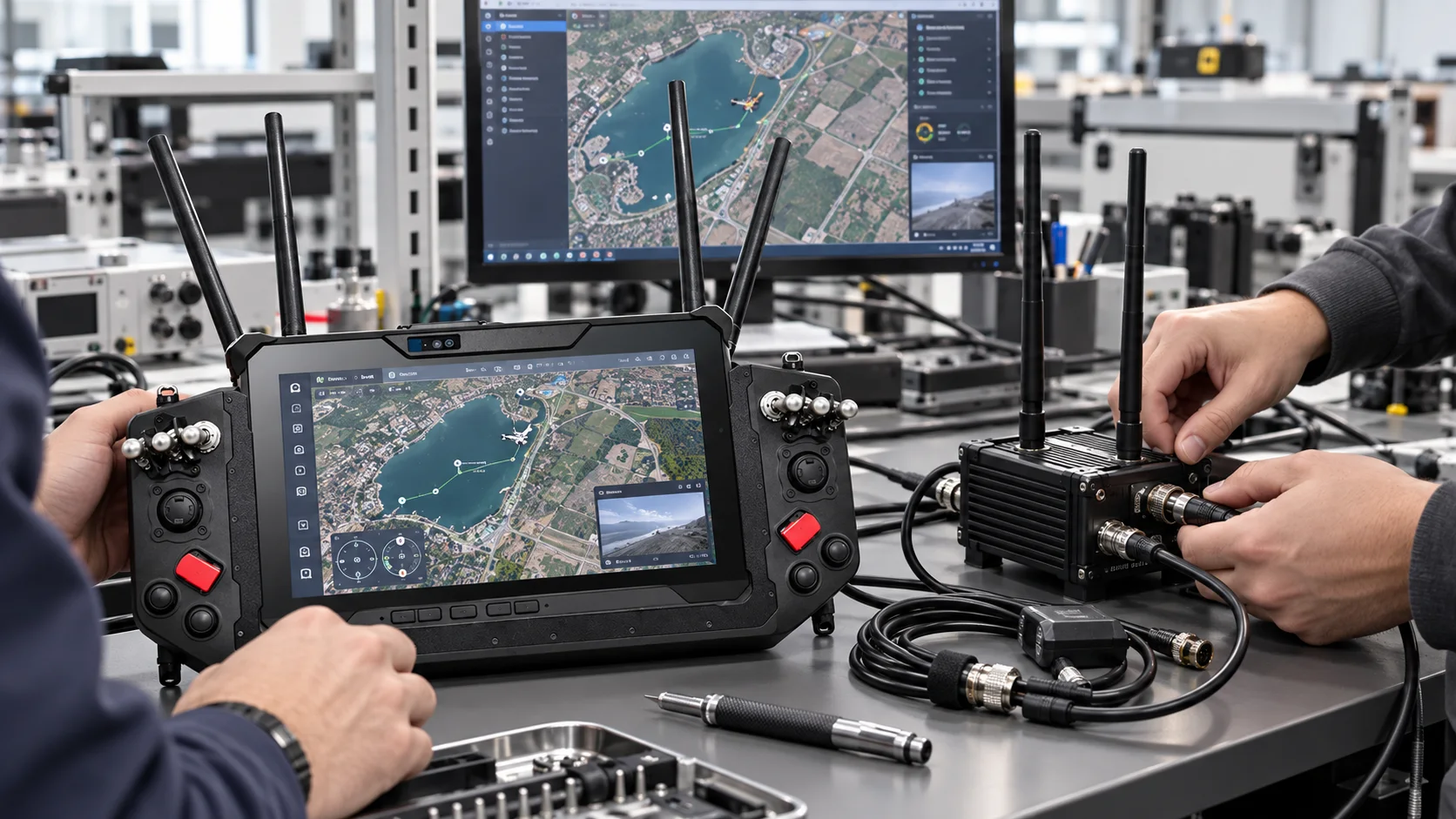
Durabook works with customers and integration providers to develop controller configurations around operator tasks.
Development brings together physical controls, hardware interfaces, application software and connected equipment.
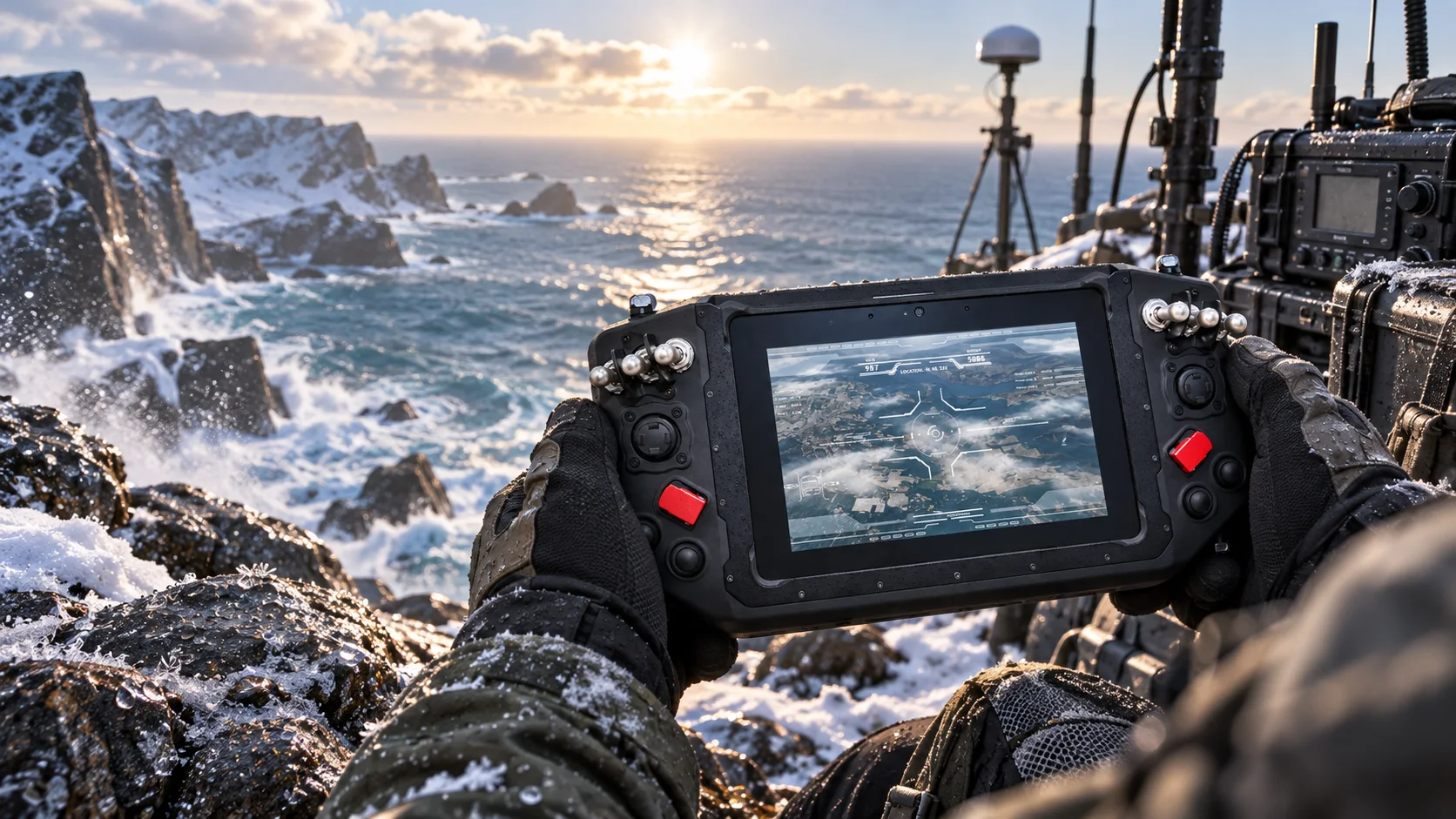
Rugged-platform features for field operating conditions.
Specifications, certifications and hazardous-location suitability vary by model and configuration.Meeting MIL-STD-461G, MIL-STD-810H and IP66 standards, Durabook’s rugged platforms are built to withstand harsh conditions, from dust and rain to vibration.
The platforms are also certified to operate at temperatures ranging from sub-freezing -29°C (-20°F) to extreme heat of 63°C (145°F), making them safe to use in hazardous locations.
Durabook combines rugged tablet and laptop computing with physical controls tailored to the operator’s tasks.
Configurable joysticks, switches and assignable buttons support the application and connected equipment.
Data links connect field operators, unmanned systems and command-center equipment.
Options include Wi-Fi, cellular networks, satellite backhaul through a separate terminal, and third-party RF modules. The connection arrangement reflects the application and deployment.
Durabook works with customers and integration providers to develop controller configurations around operator tasks.
Development brings together physical controls, hardware interfaces, application software and connected equipment.
Meeting MIL-STD-461G, MIL-STD-810H and IP66 standards, Durabook’s rugged platforms are built to withstand harsh conditions, from dust and rain to vibration.
The platforms are also certified to operate at temperatures ranging from sub-freezing -29°C (-20°F) to extreme heat of 63°C (145°F), making them safe to use in hazardous locations.
CUSTOM CONTROLS AND INTERFACES
01 / 04Select a component to see its configuration.
Left and right controls can each be configured with a direction pad, castle-type joystick or stick-type joystick. Toggle switches are available in standard or locking designs, or can be left unfitted. Six push buttons support configurable functions, with optional guard covers for two of the buttons.
Select a thumbwheel to compare, or a push button to view its functions.
Rear thumbwheels support fine-tuning functions, including trim or camera zoom. The rear panel also includes two push buttons with assignable functions.
LAN and USB interfaces connect the controller to external equipment, while DC-IN provides an external power connection. Interface and cable requirements are defined by the connected devices and installation.
The rear cover features a removable design, allowing customization for various expansion modules with USB interfaces.
Left and right controls can each be configured with a direction pad, castle-type joystick or stick-type joystick. Toggle switches are available in standard or locking designs, or can be left unfitted. Six push buttons support configurable functions, with optional guard covers for two of the buttons.
Rear thumbwheels support fine-tuning functions, including trim or camera zoom. The rear panel also includes two push buttons with assignable functions.
LAN and USB interfaces connect the controller to external equipment, while DC-IN provides an external power connection. Interface and cable requirements are defined by the connected devices and installation.
The rear cover features a removable design, allowing customization for various expansion modules with USB interfaces.
DATA LINKS AND SYSTEM INTEGRATION
01 / 02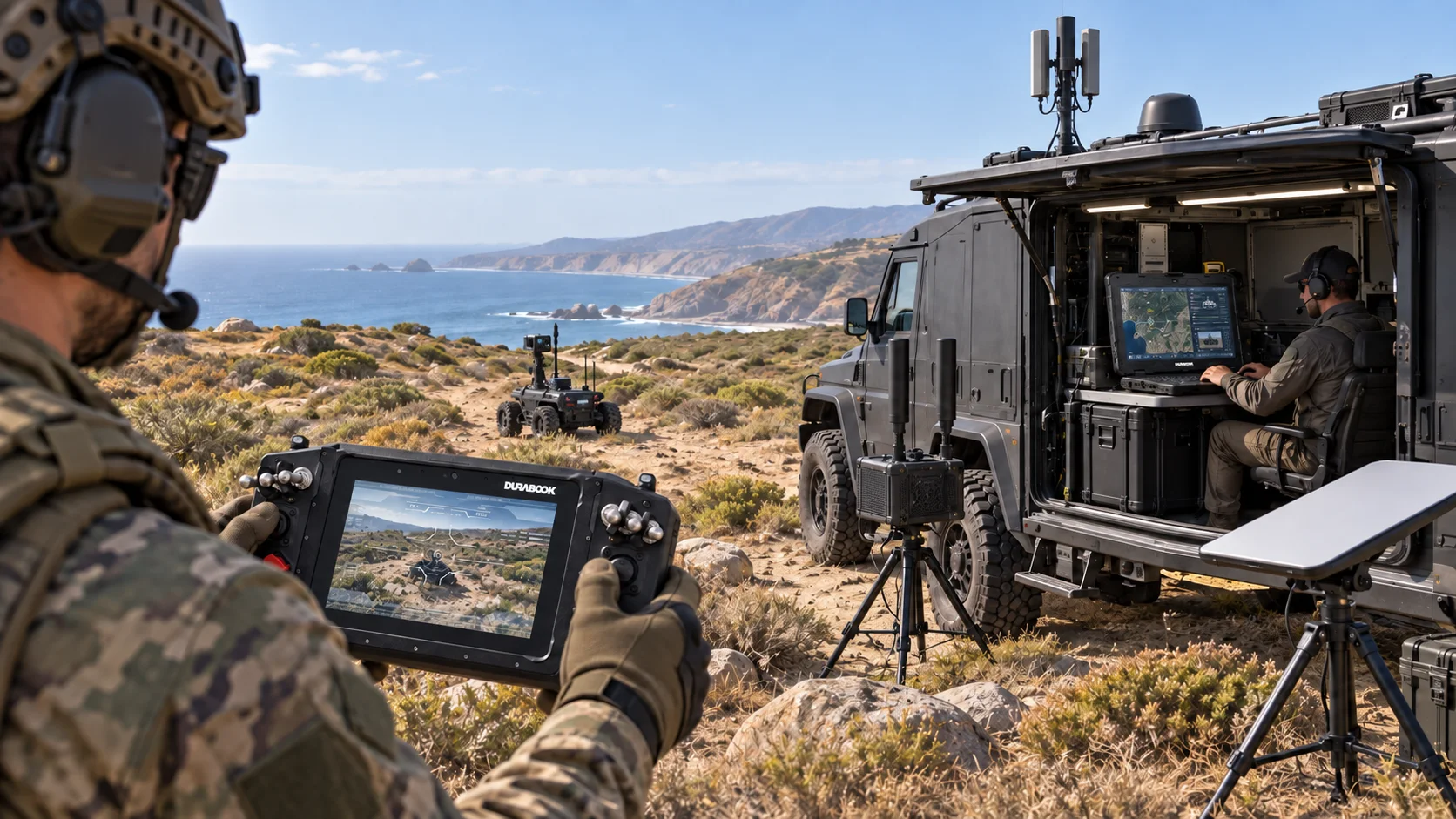
Flexible connectivity options, including Wi-Fi, 4G/5G, and other wireless technologies, seamlessly connect field operators, devices, and command centers within a unified communications ecosystem. For operations beyond conventional network coverage, an optional satellite terminal can be integrated to provide reliable backhaul connectivity. Available communication features may vary by controller platform.
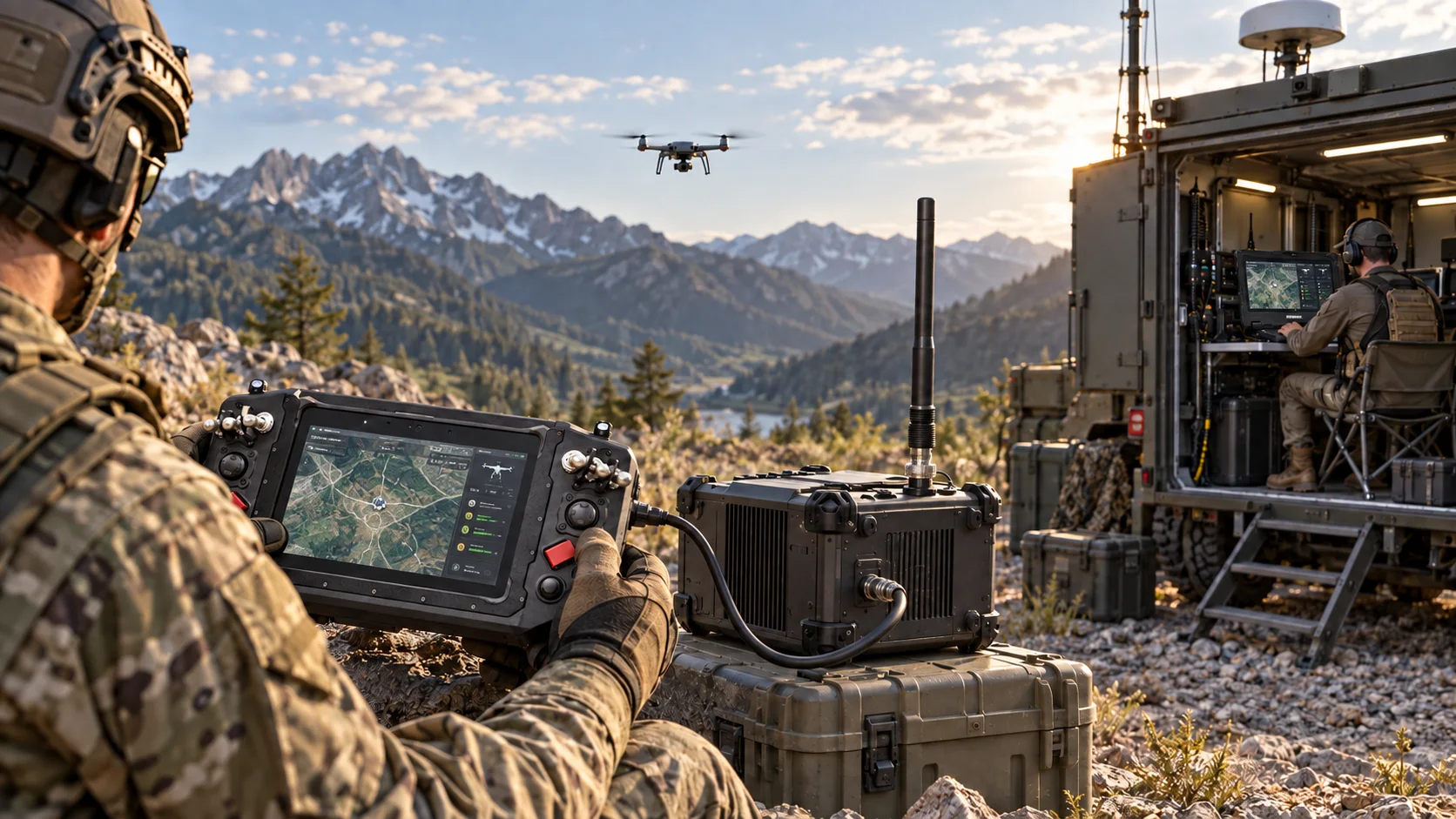
A third-party RF radio provides a dedicated wireless link to the unmanned system. The controller connects to the proprietary radio, while command-center equipment connects through the configured network. The radio and connections are chosen for each deployment.
Flexible connectivity options, including Wi-Fi, 4G/5G, and other wireless technologies, seamlessly connect field operators, devices, and command centers within a unified communications ecosystem. For operations beyond conventional network coverage, an optional satellite terminal can be integrated to provide reliable backhaul connectivity. Available communication features may vary by controller platform.
A third-party RF radio provides a dedicated wireless link to the unmanned system. The controller connects to the proprietary radio, while command-center equipment connects through the configured network. The radio and connections are chosen for each deployment.
OPERATING SYSTEMS AND APPLICATIONS
01 / 02 APPLICATION AT THE POINT OF CONTROL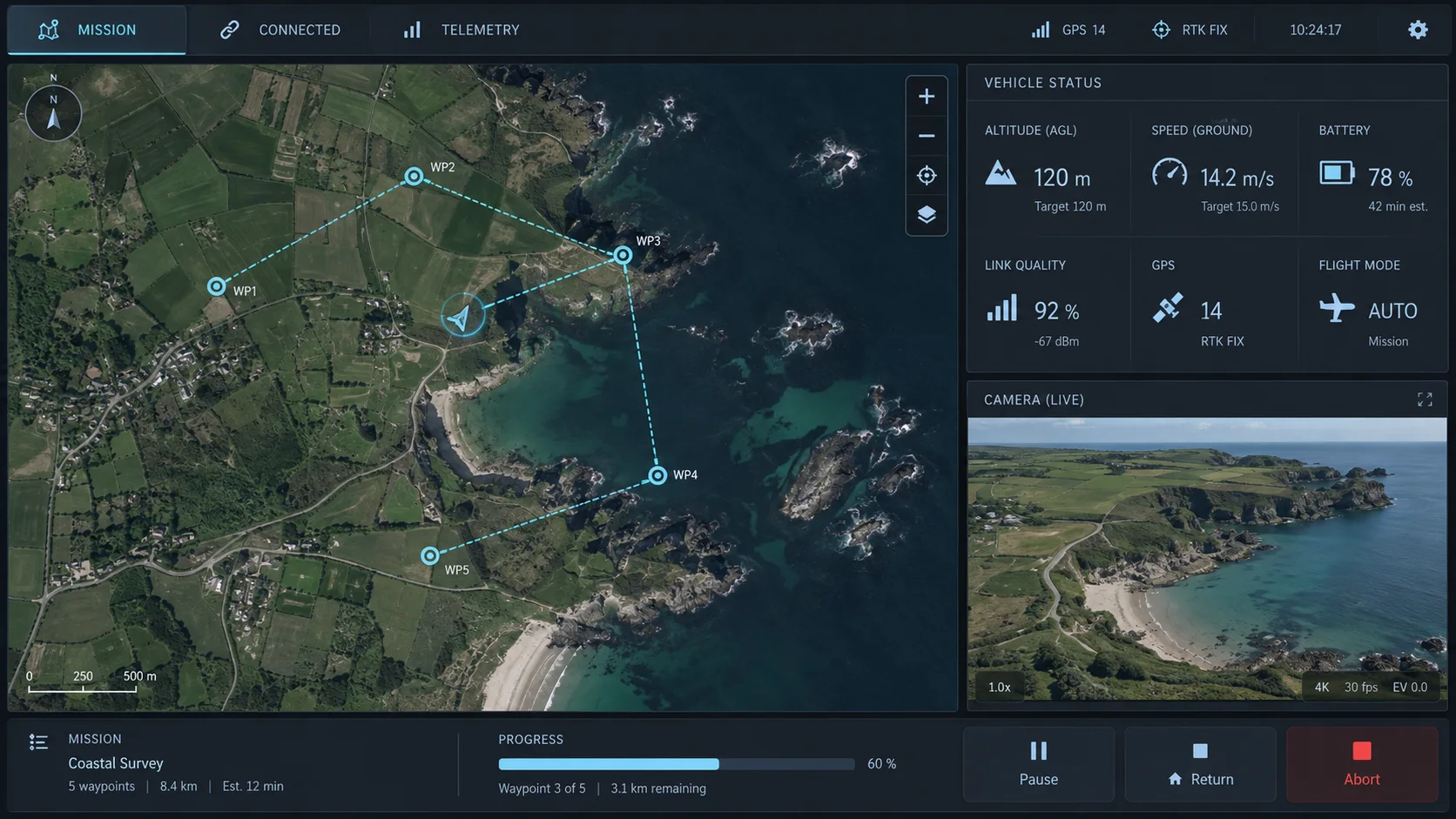
Windows 11 support brings professional applications, including WinTAK, to the controller for mission planning, monitoring and on-site data review. Broad peripheral support connects field equipment, while enterprise security and management tools support controlled deployments.
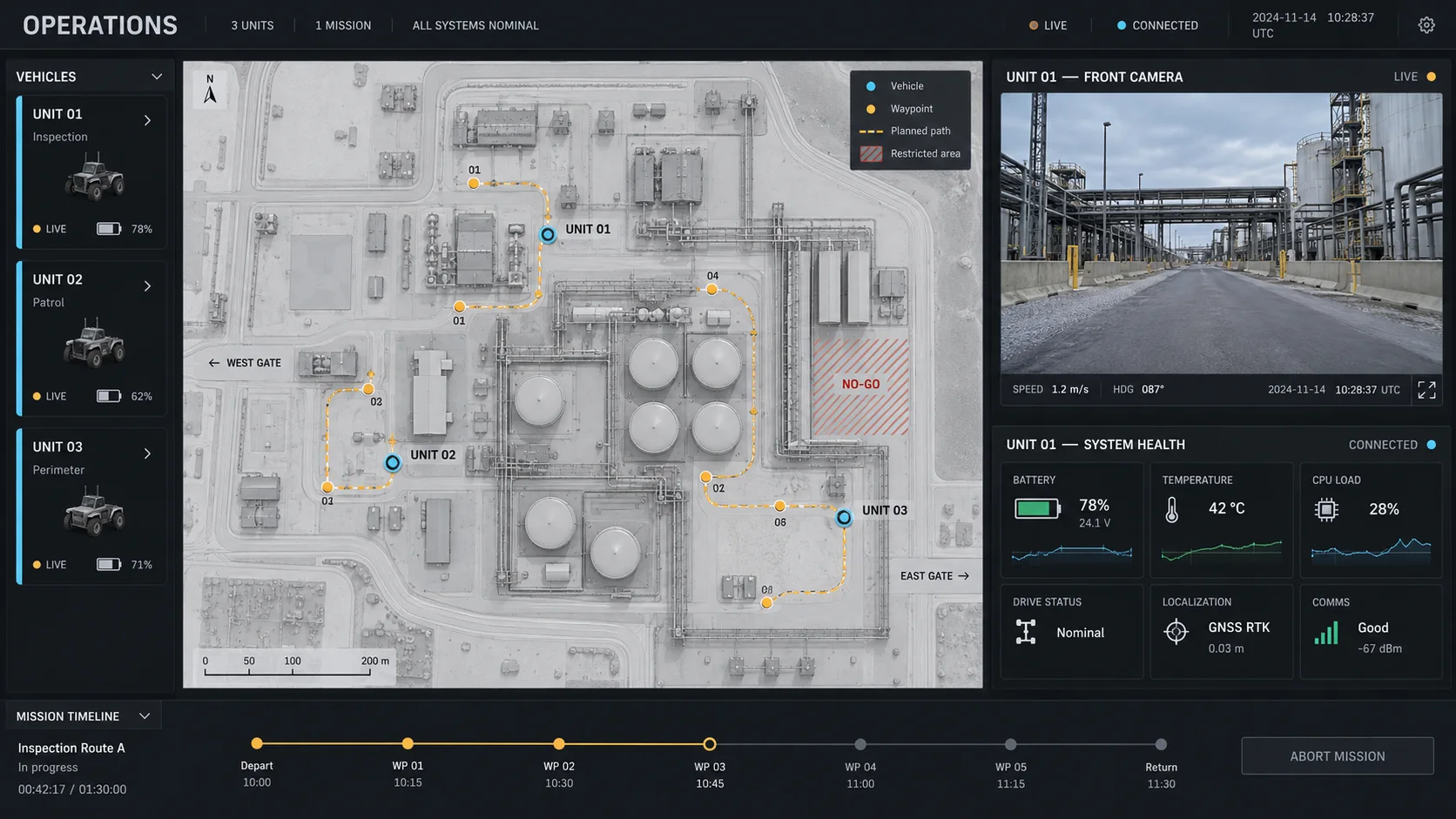
Build your ground control setup around a Linux environment. Linux support gives development teams flexibility to integrate open-source and custom application software, physical controls and connected systems.
Windows 11 support brings professional applications, including WinTAK, to the controller for mission planning, monitoring and on-site data review. Broad peripheral support connects field equipment, while enterprise security and management tools support controlled deployments.
Build your ground control setup around a Linux environment. Linux support gives development teams flexibility to integrate open-source and custom application software, physical controls and connected systems.
CONTROLLER PLATFORMS
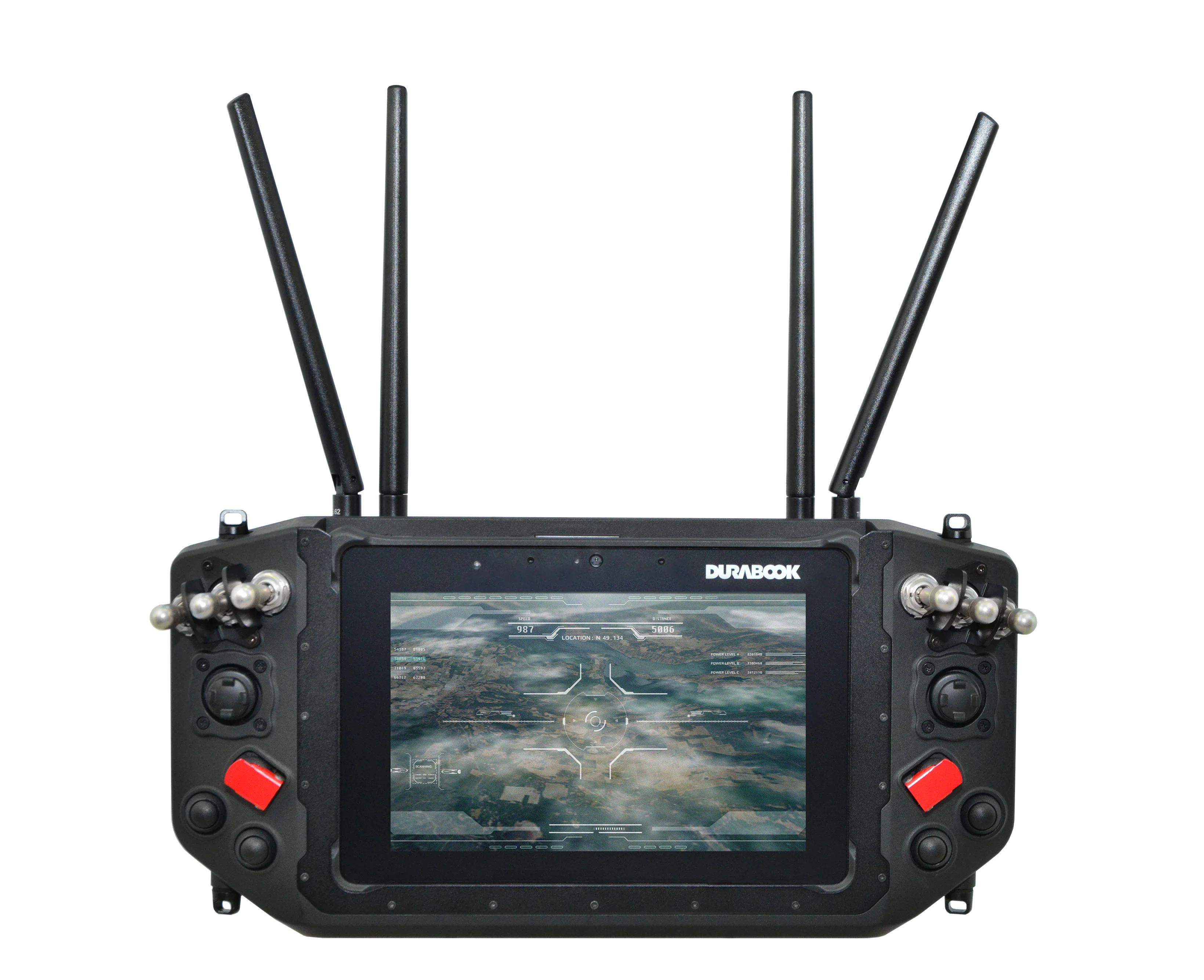
A rugged tablet controller with configurable physical controls and equipment interfaces.
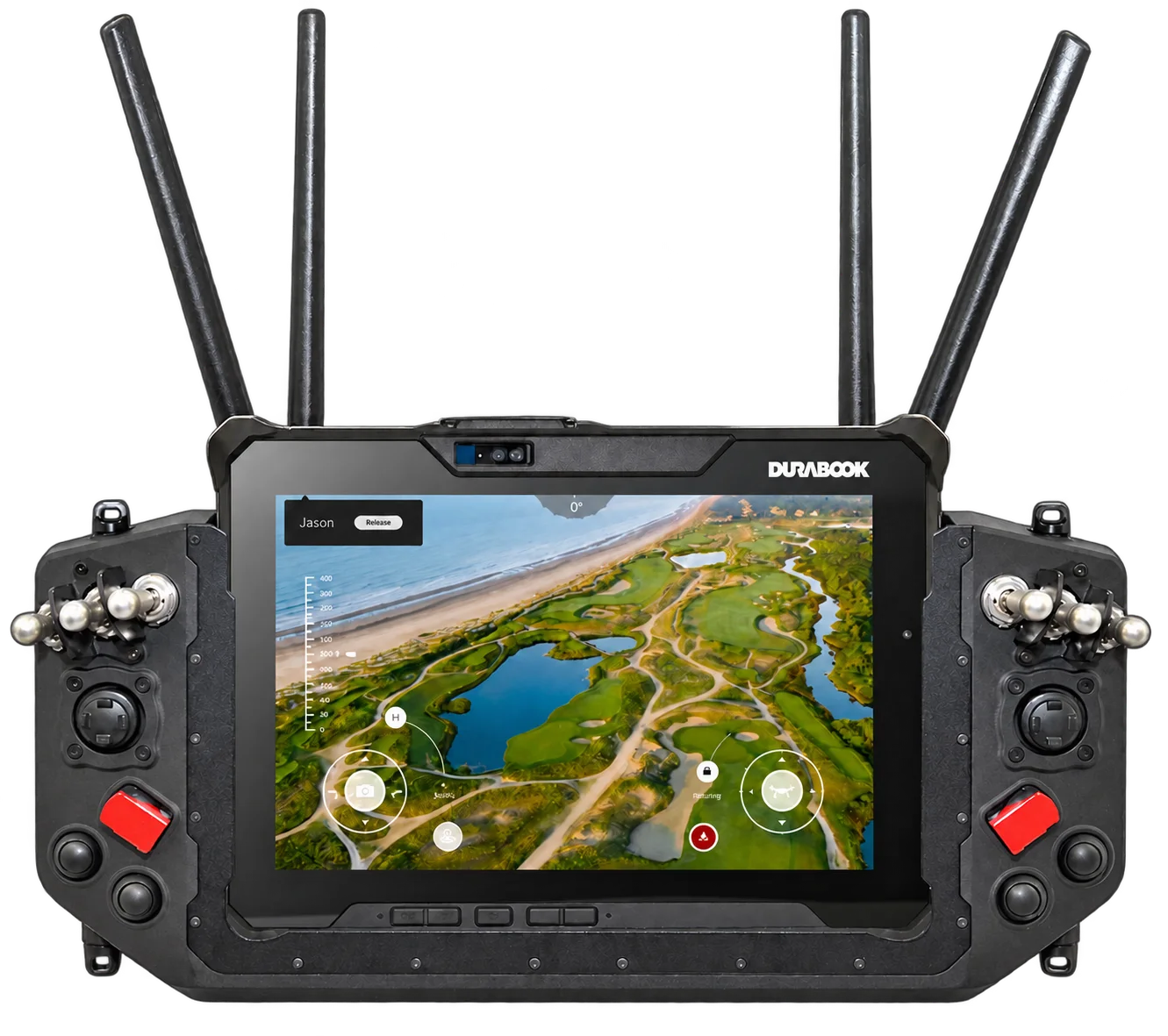
A rugged tablet controller for application-specific controls and system integration.
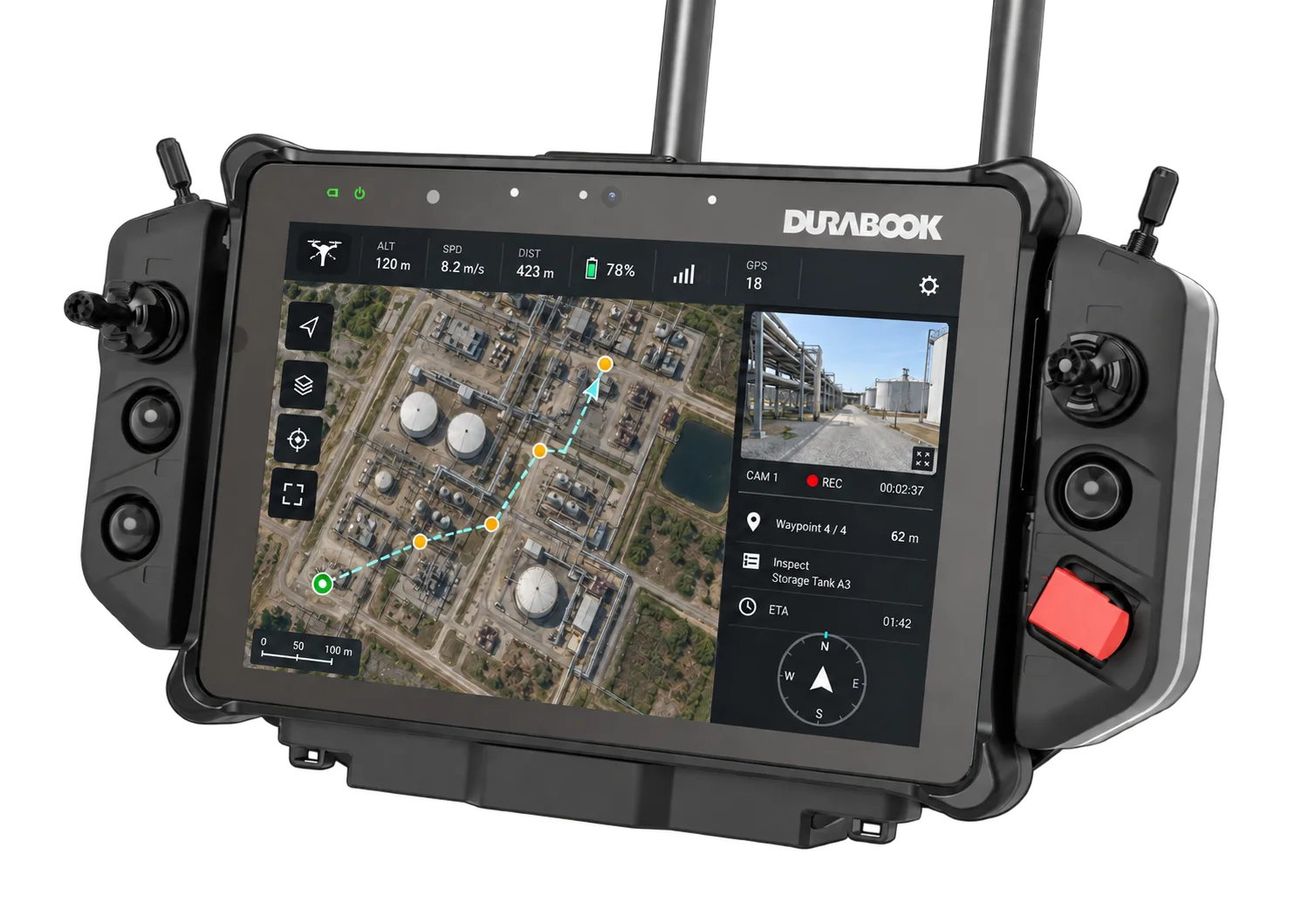
A lightweight controller for mobile field operations.
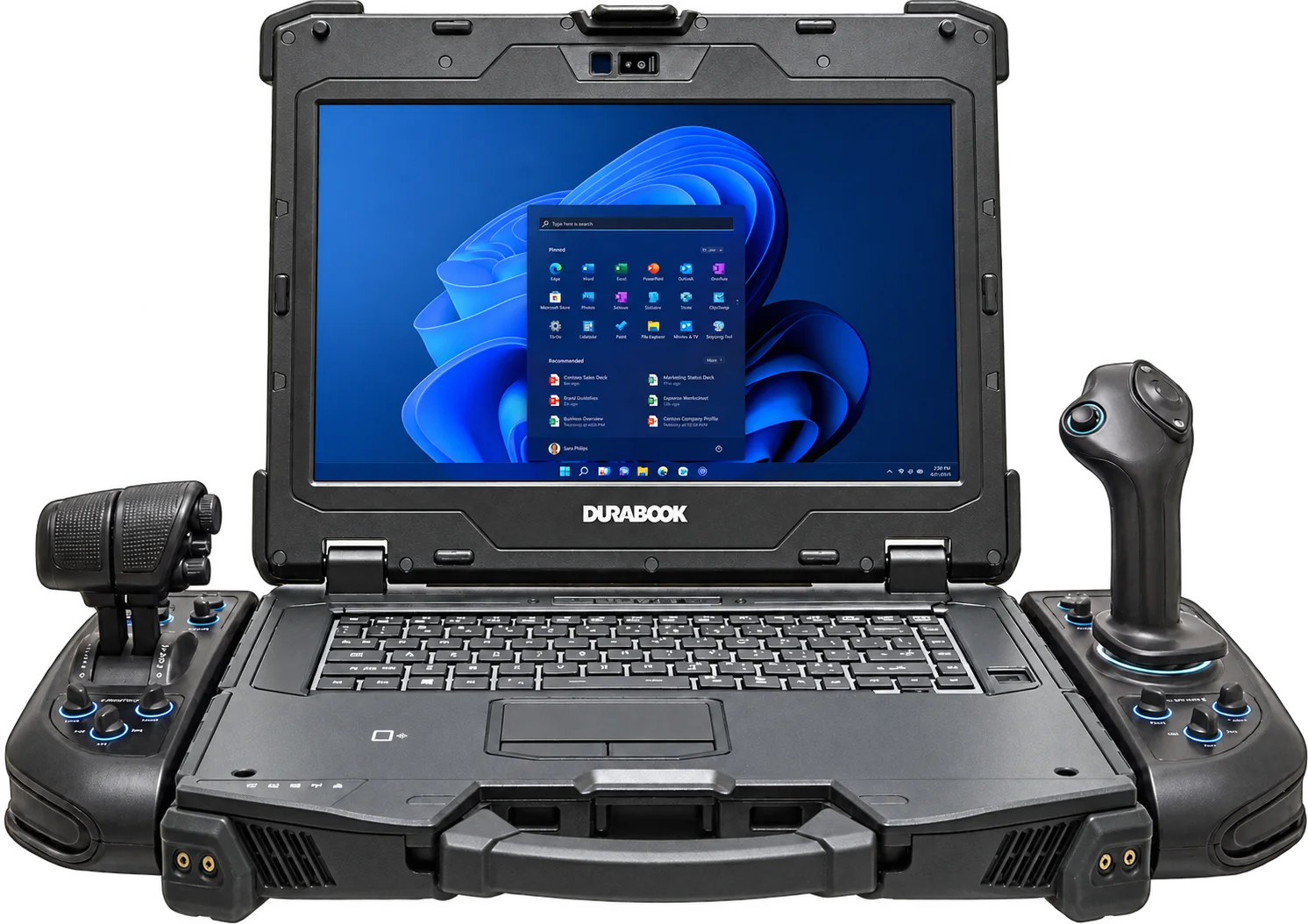
A laptop-based controller combining computing and integrated physical controls.
OPERATIONS IN THE FIELD
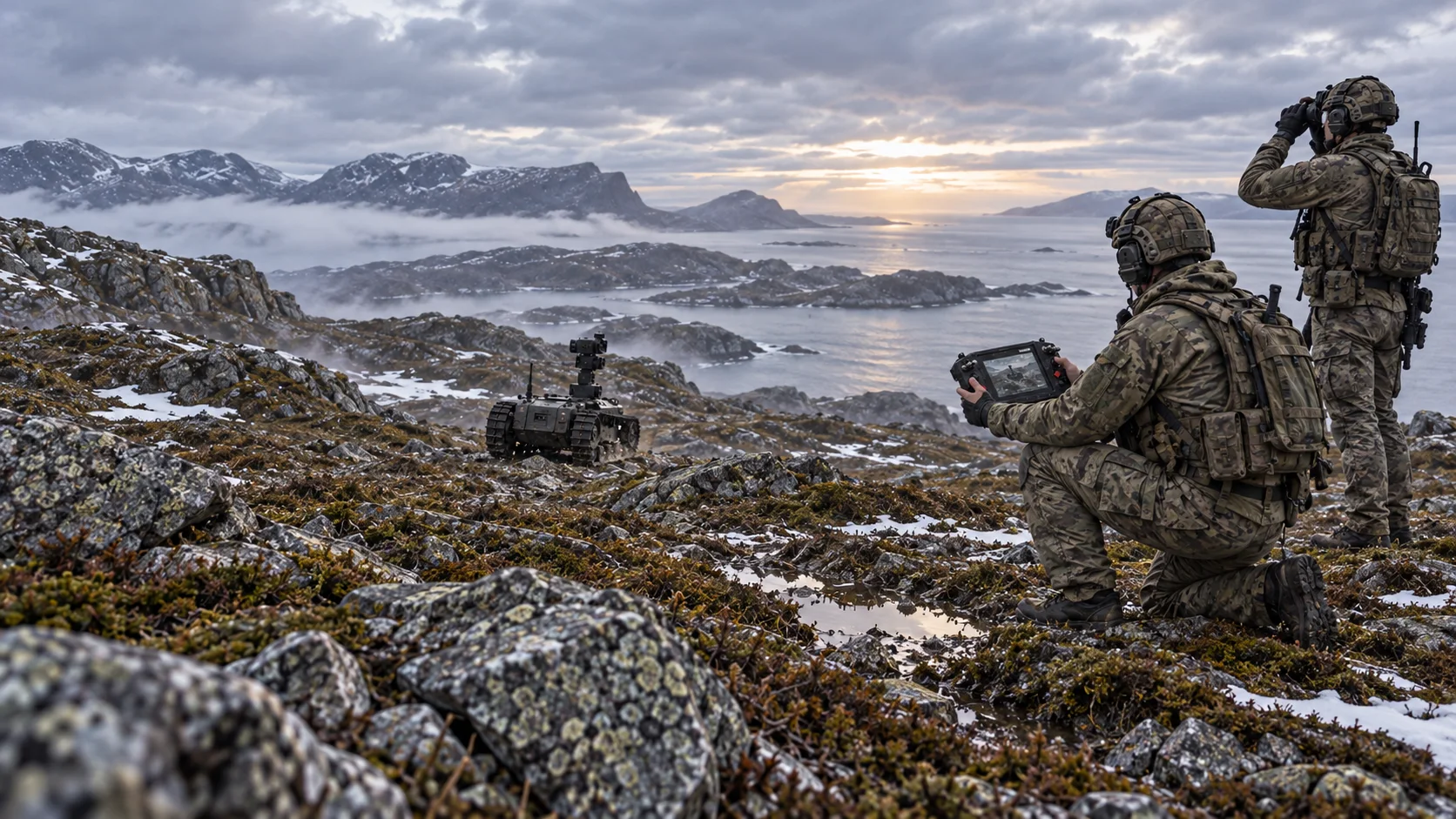
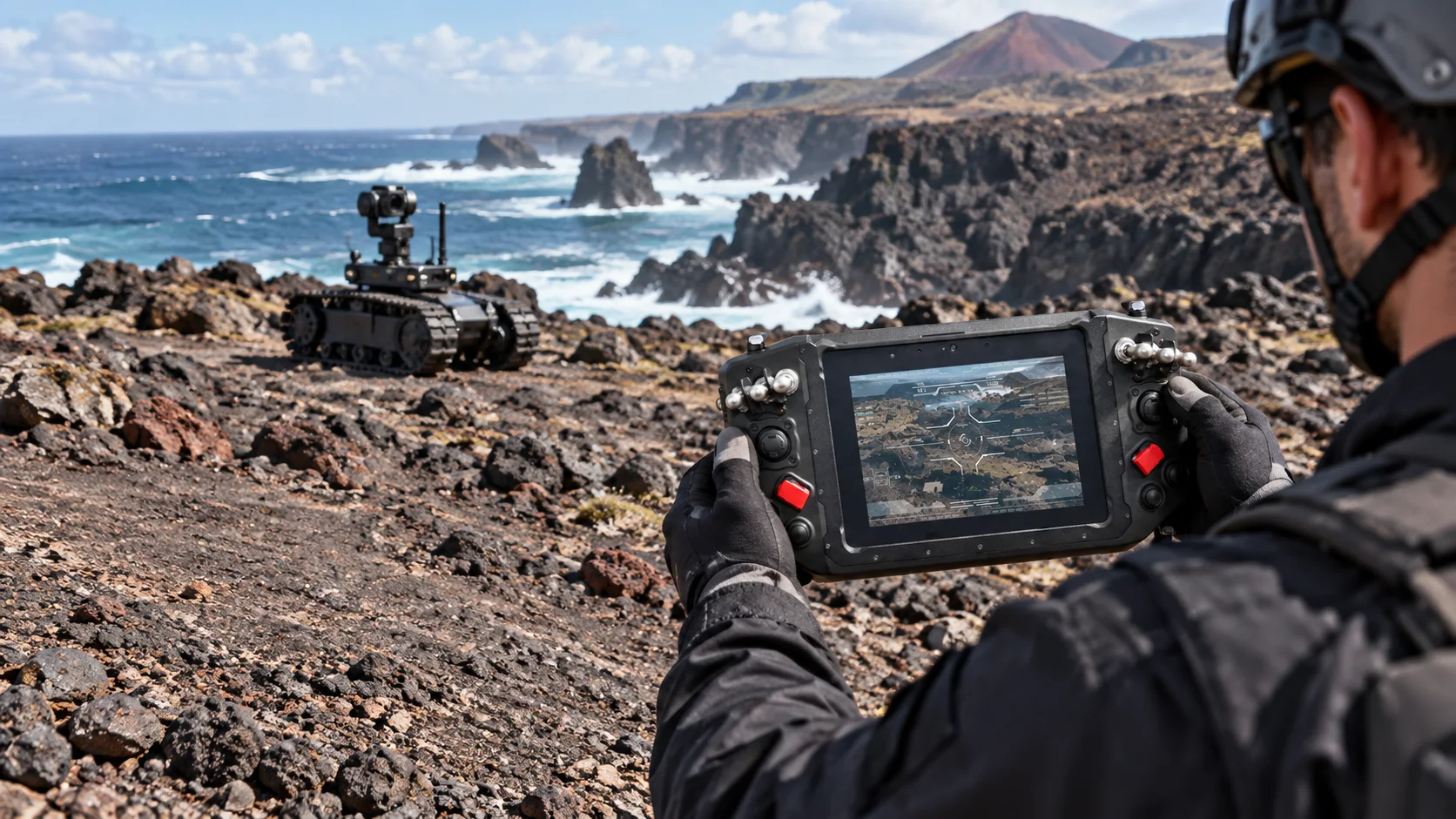
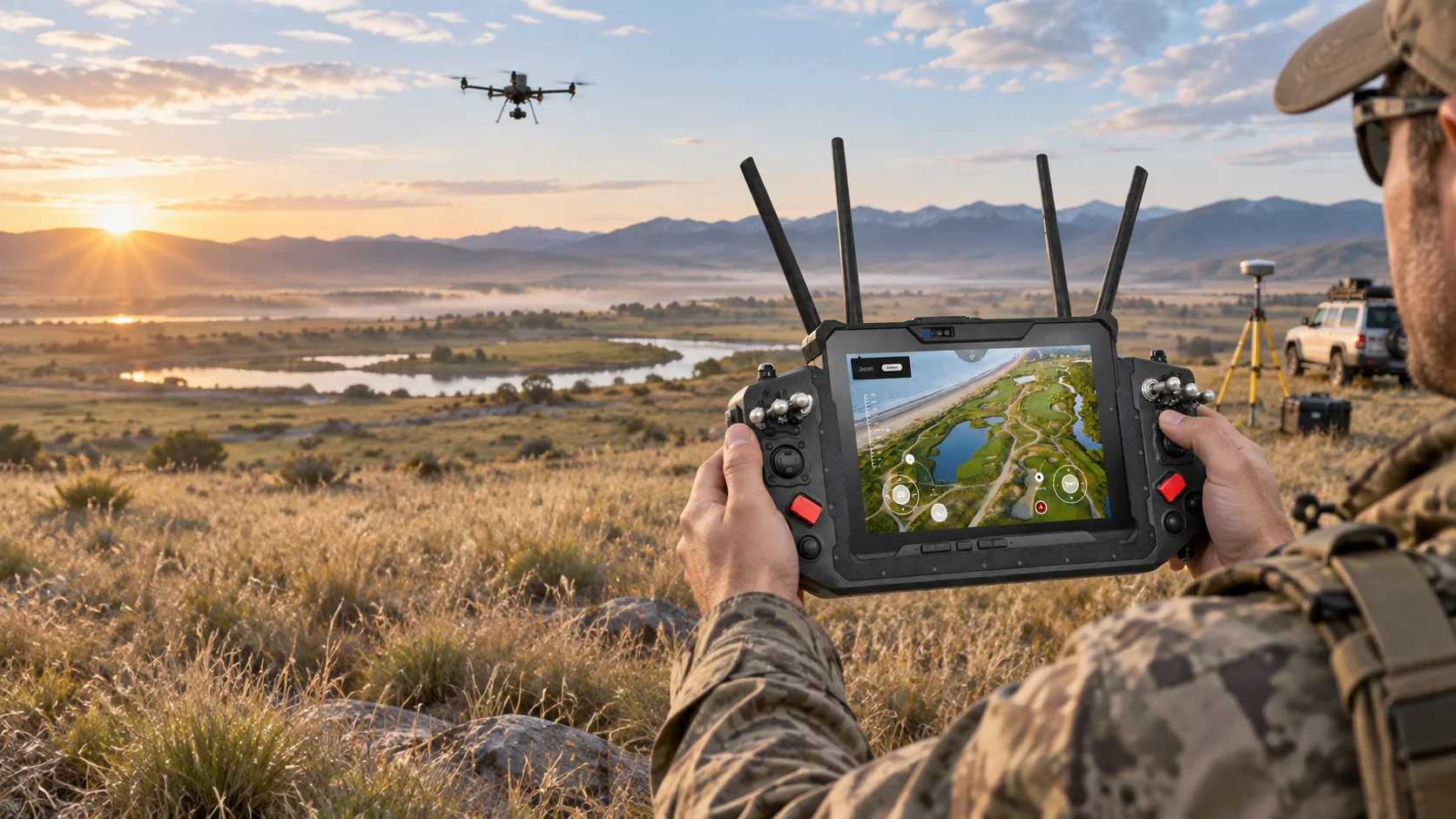
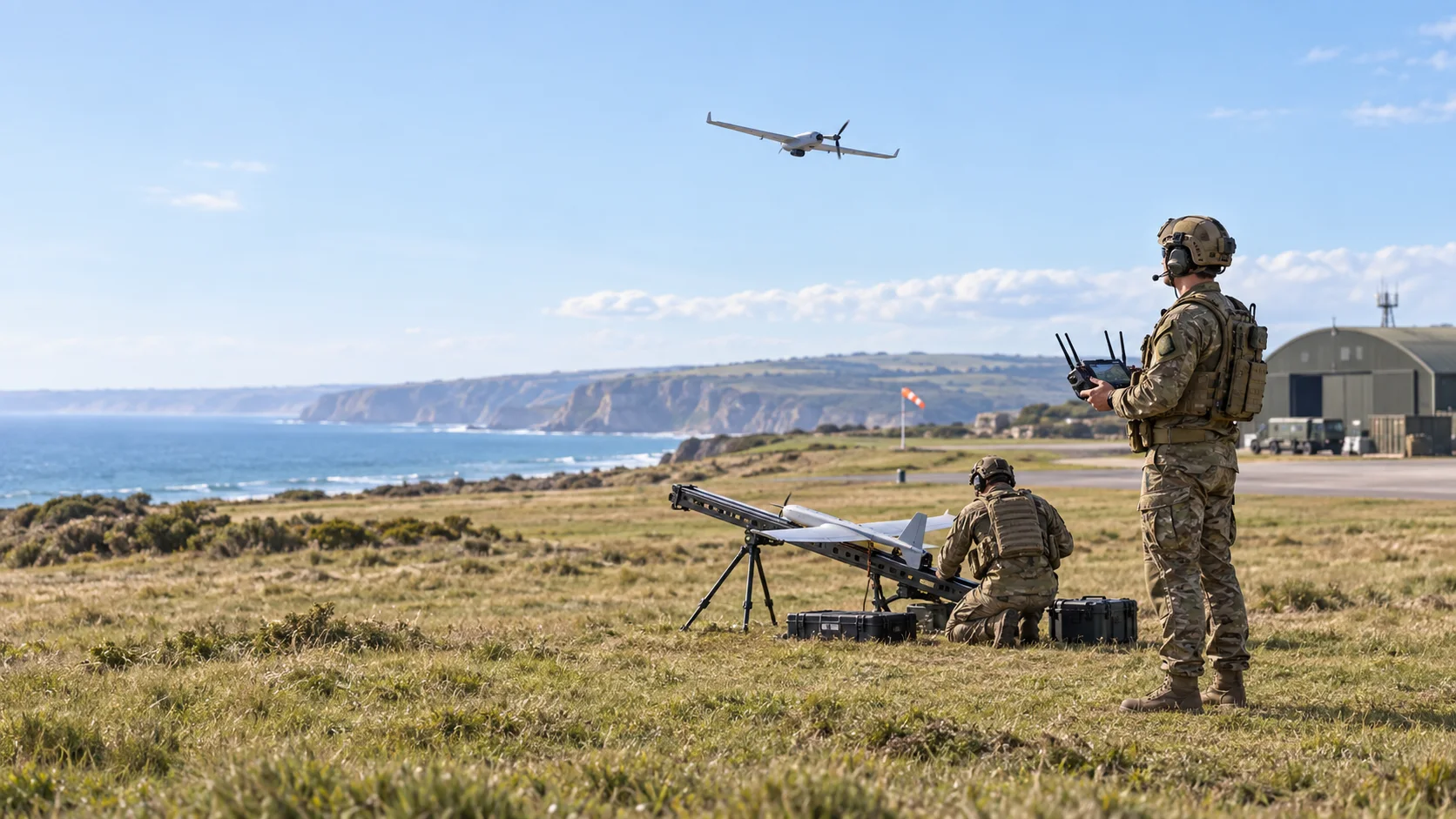
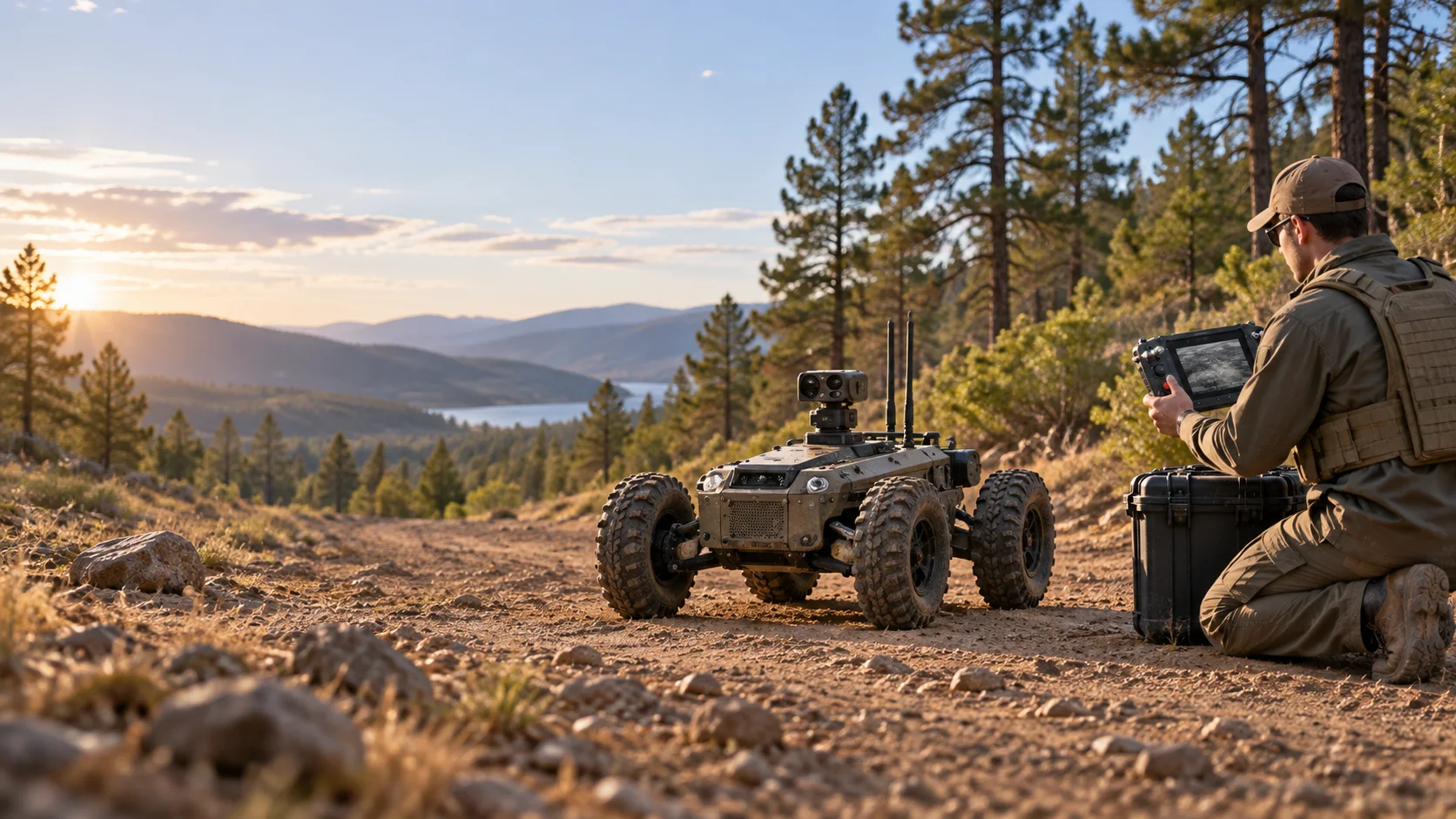
Ground control stations support field teams monitoring and controlling unmanned aerial vehicles (UAVs), as well as unmanned ground and maritime systems.
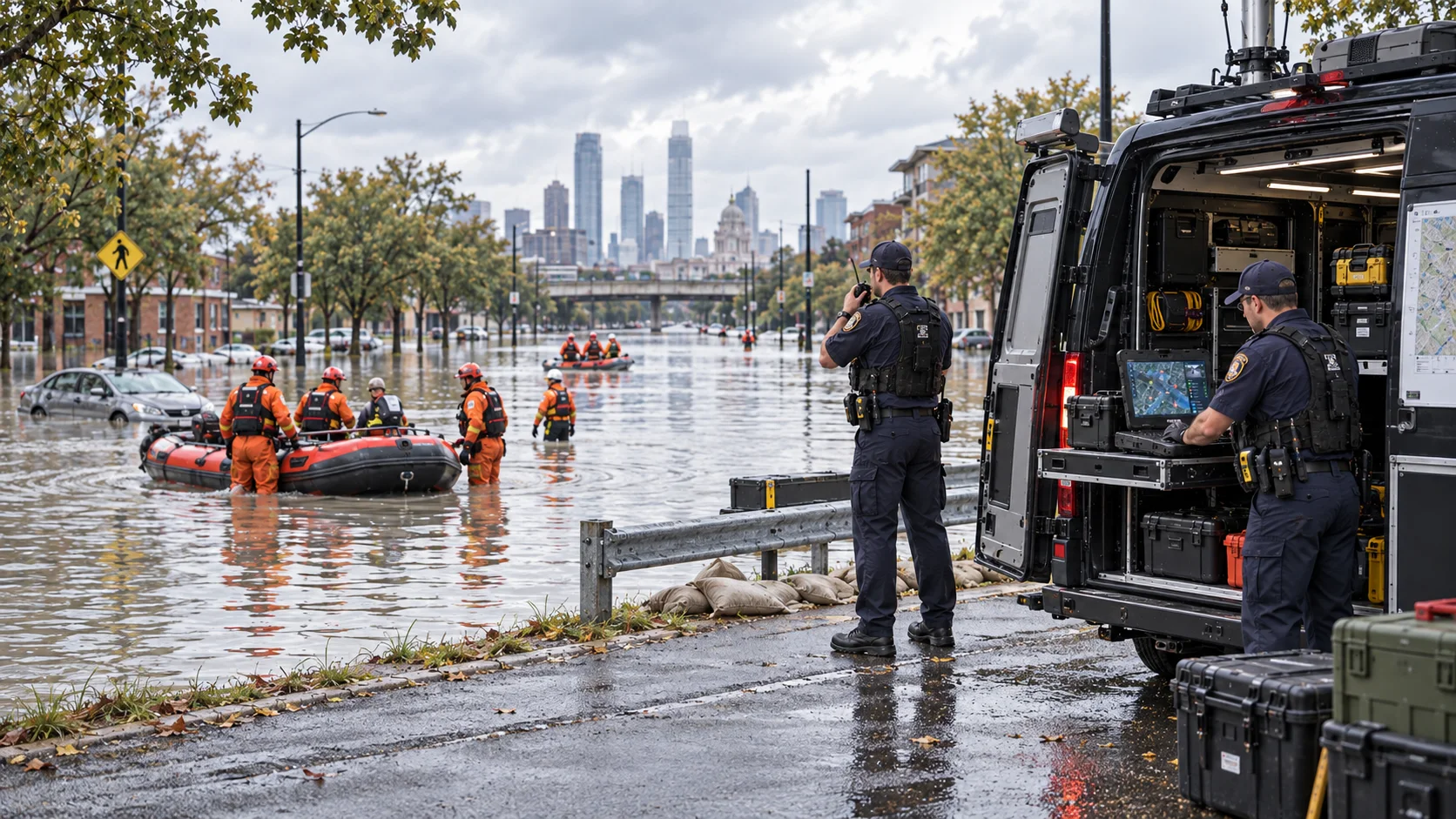
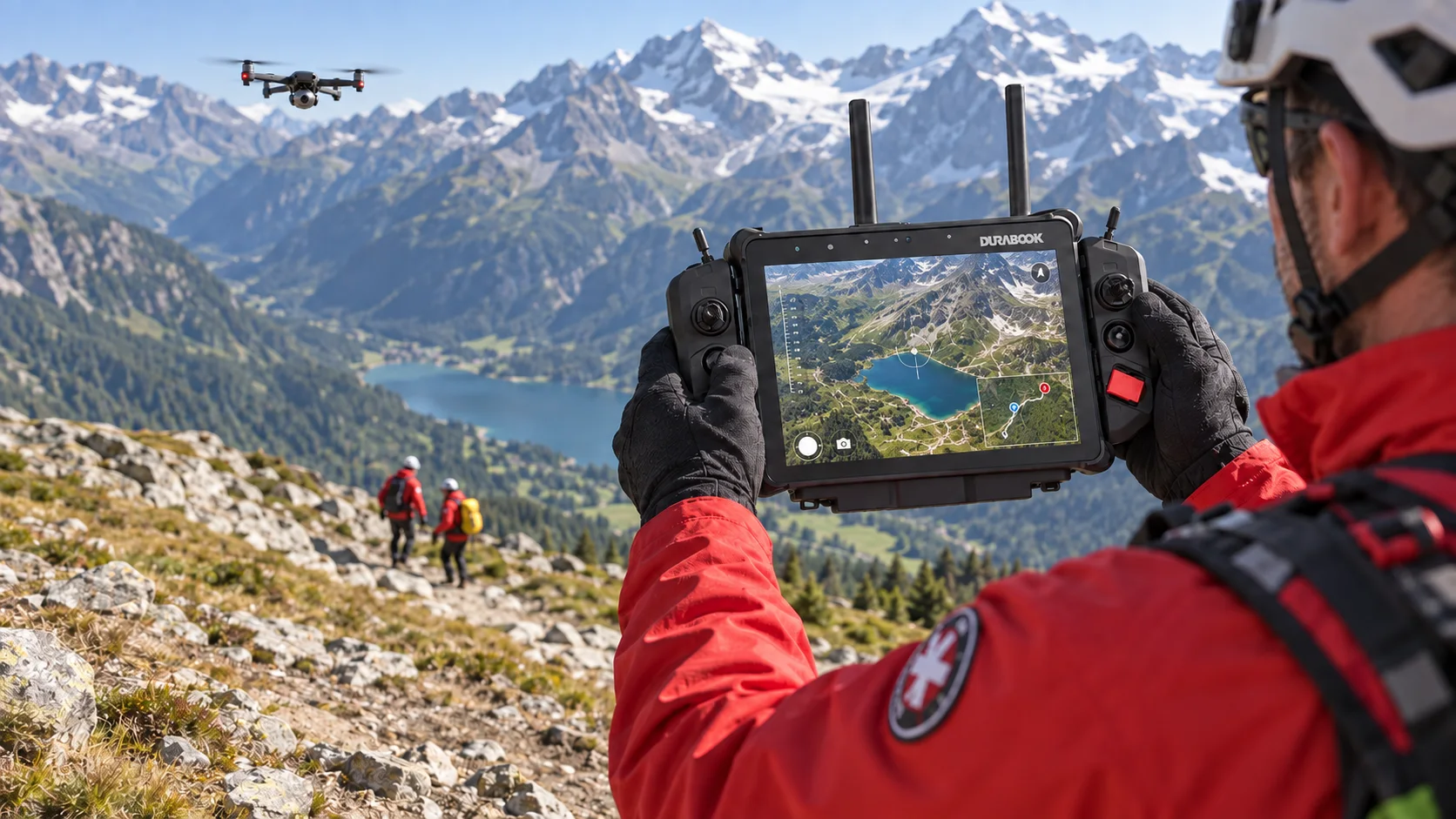
Unmanned systems support incident assessment, remote observation and search-and-rescue operations.
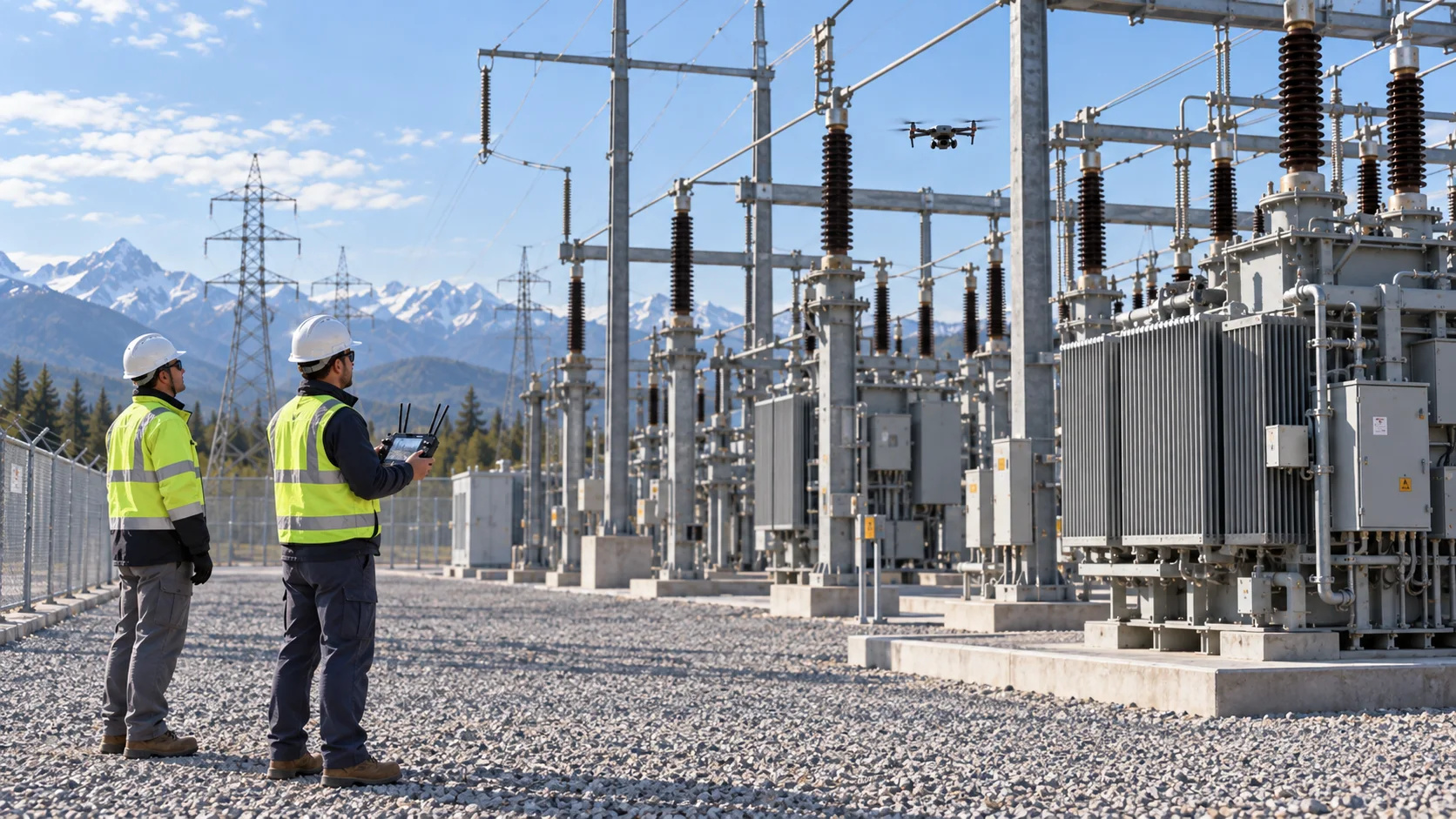
Unmanned inspection supports condition assessment of power lines, pipelines and substations.
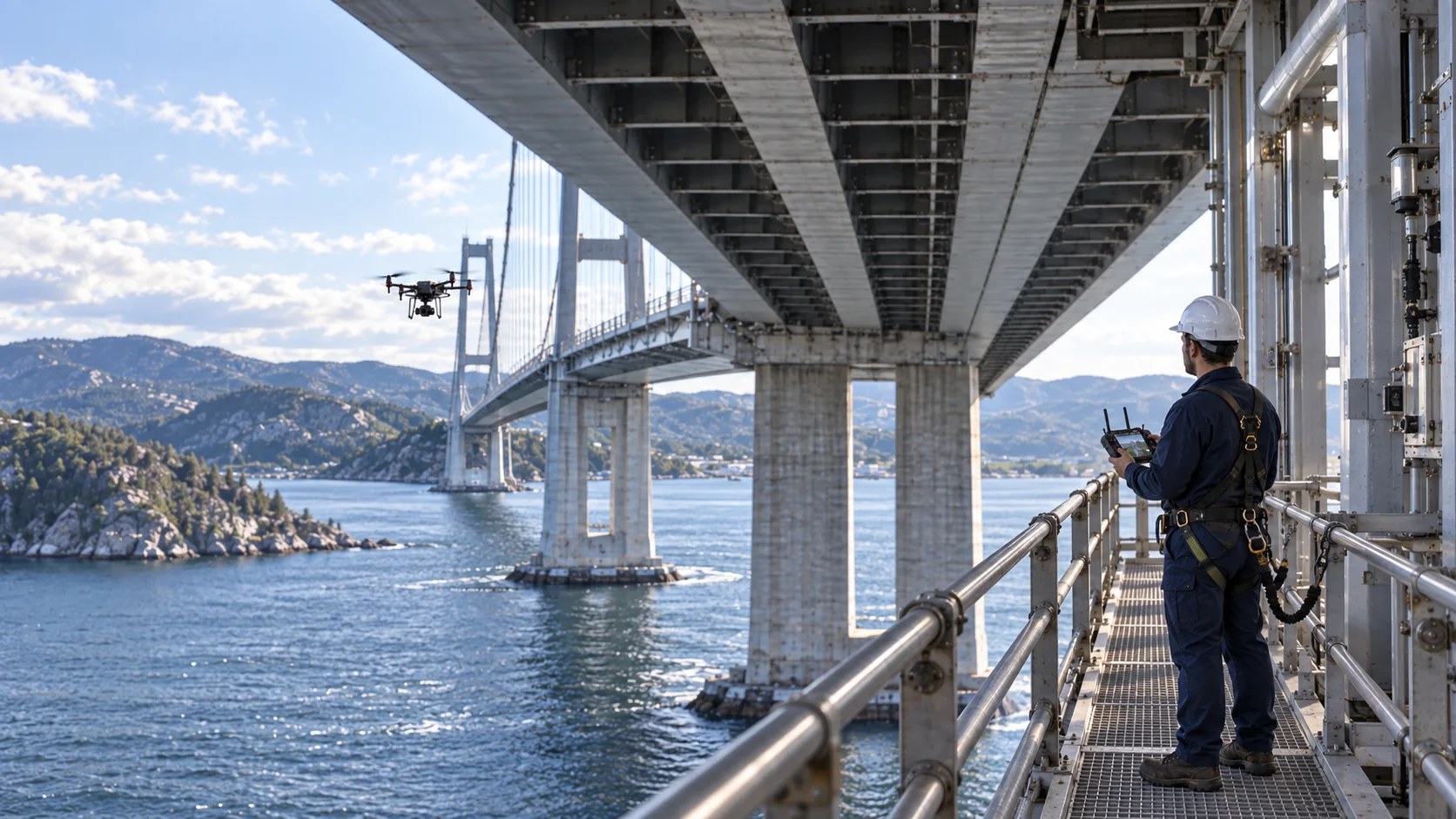
Remote inspection and monitoring cover transport routes, communications facilities and ports.
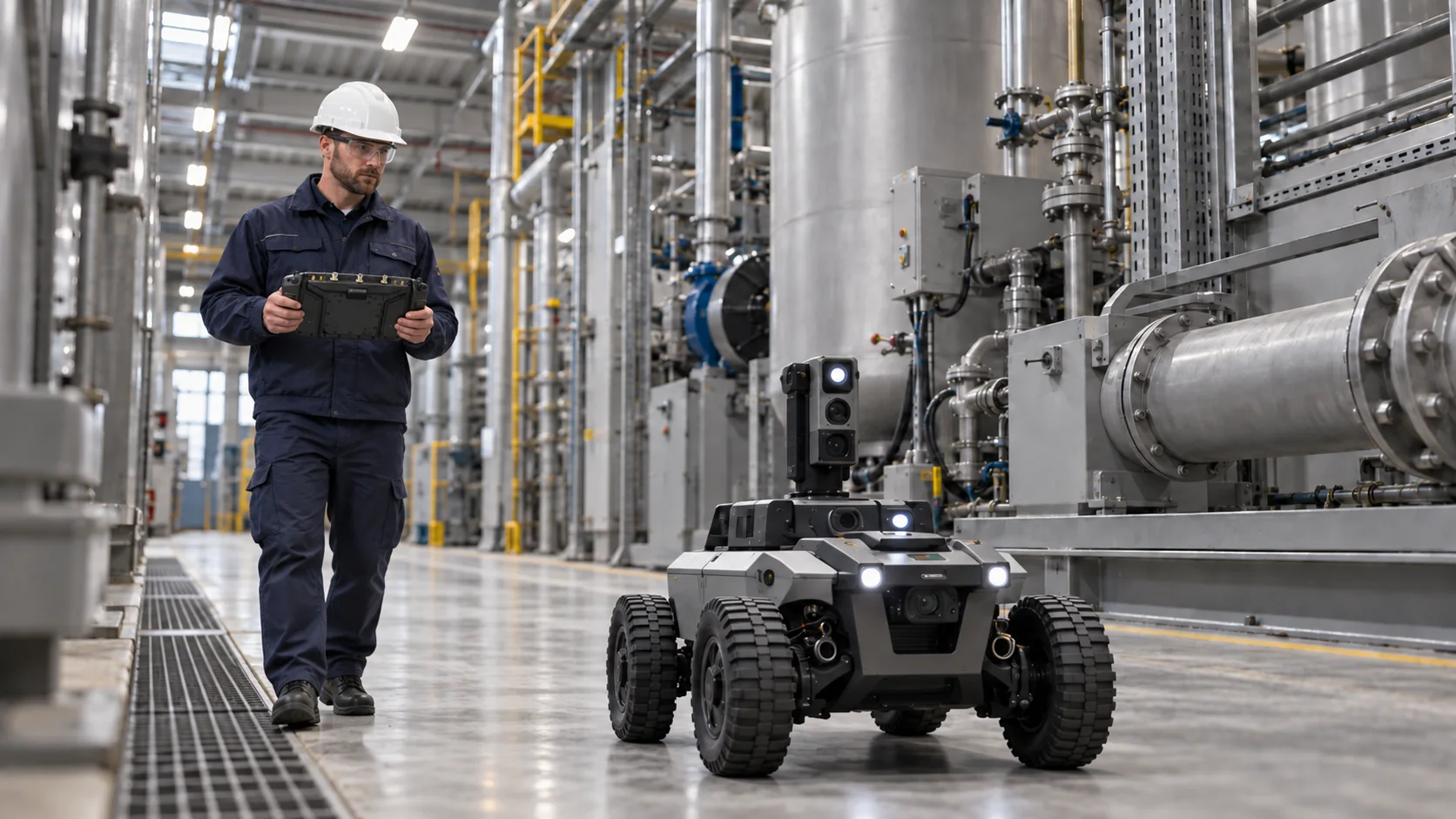
Unmanned systems support inspection of industrial plants, equipment and difficult-access areas.
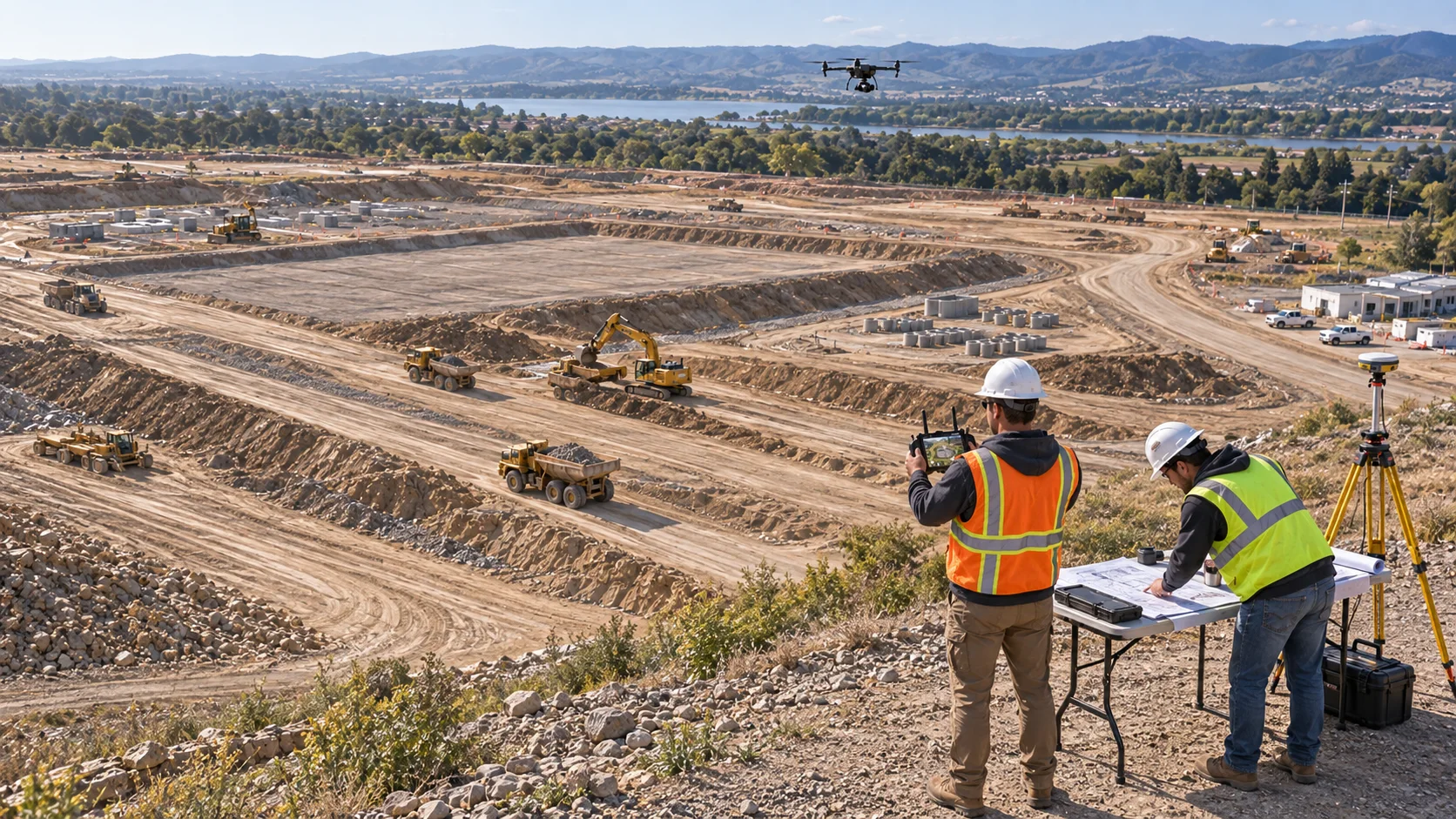
Drone ground control stations support progress monitoring across construction sites.
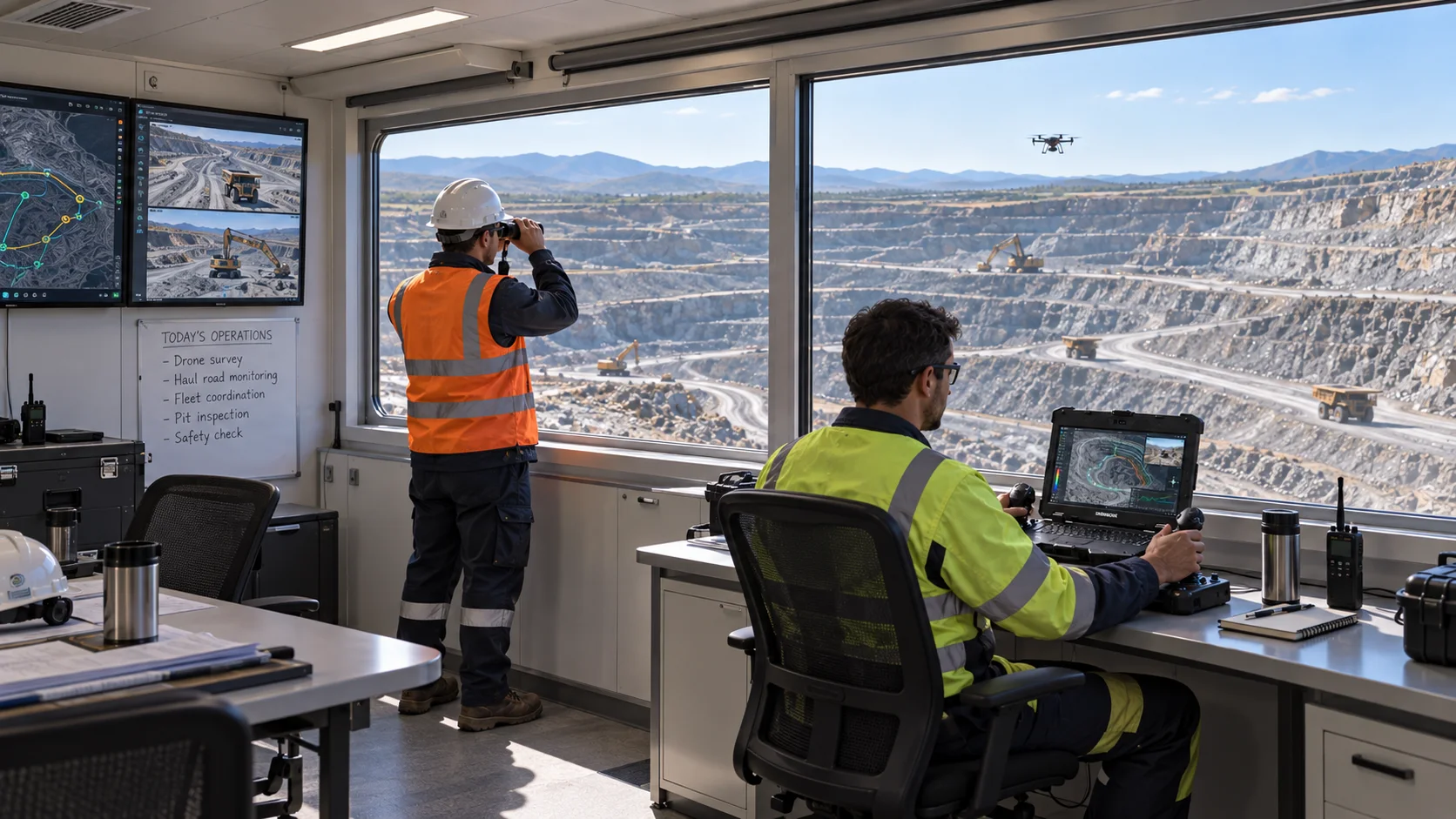
Unmanned systems support site mapping, stockpile assessment and equipment inspection in remote resource operations.
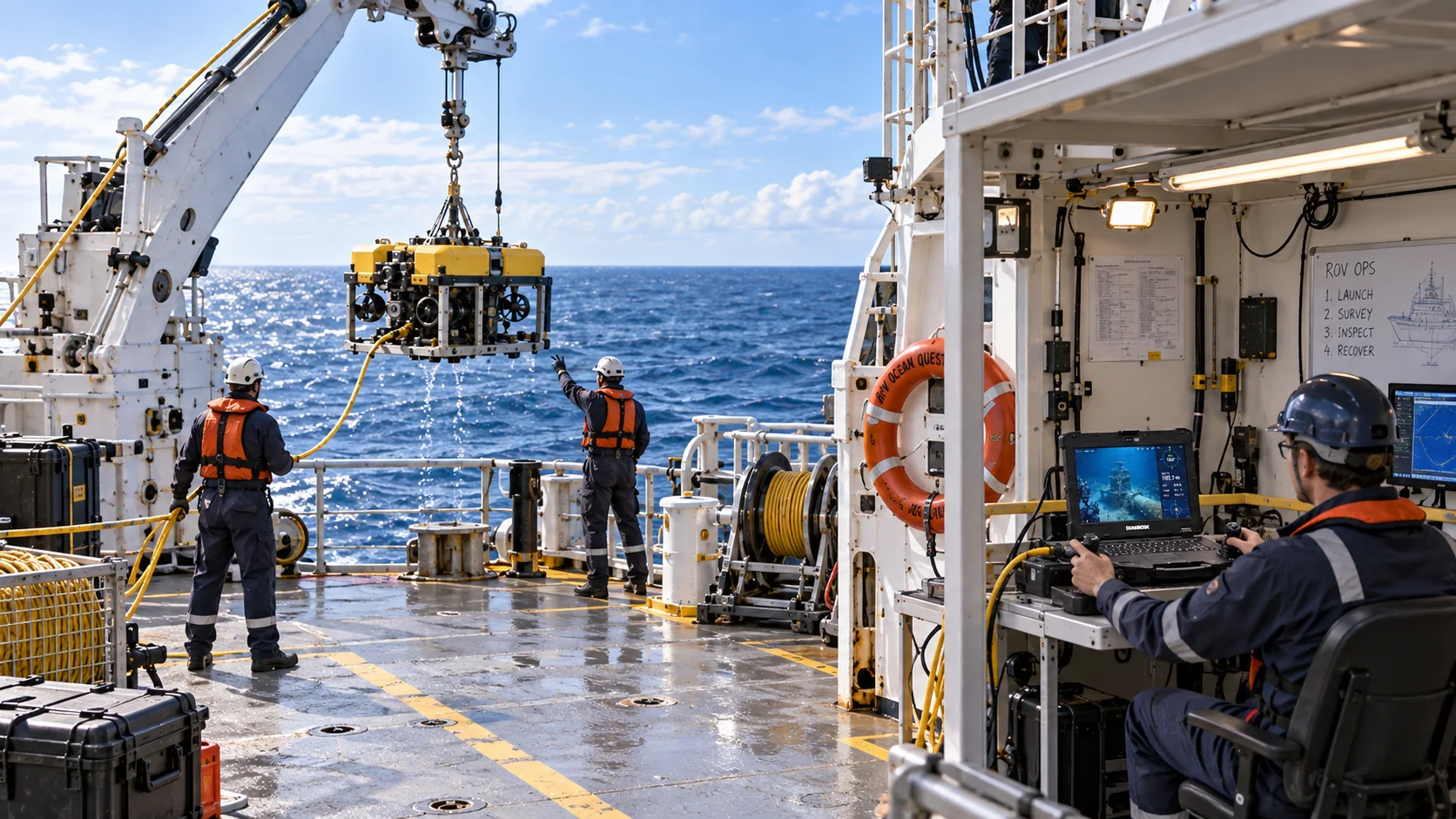
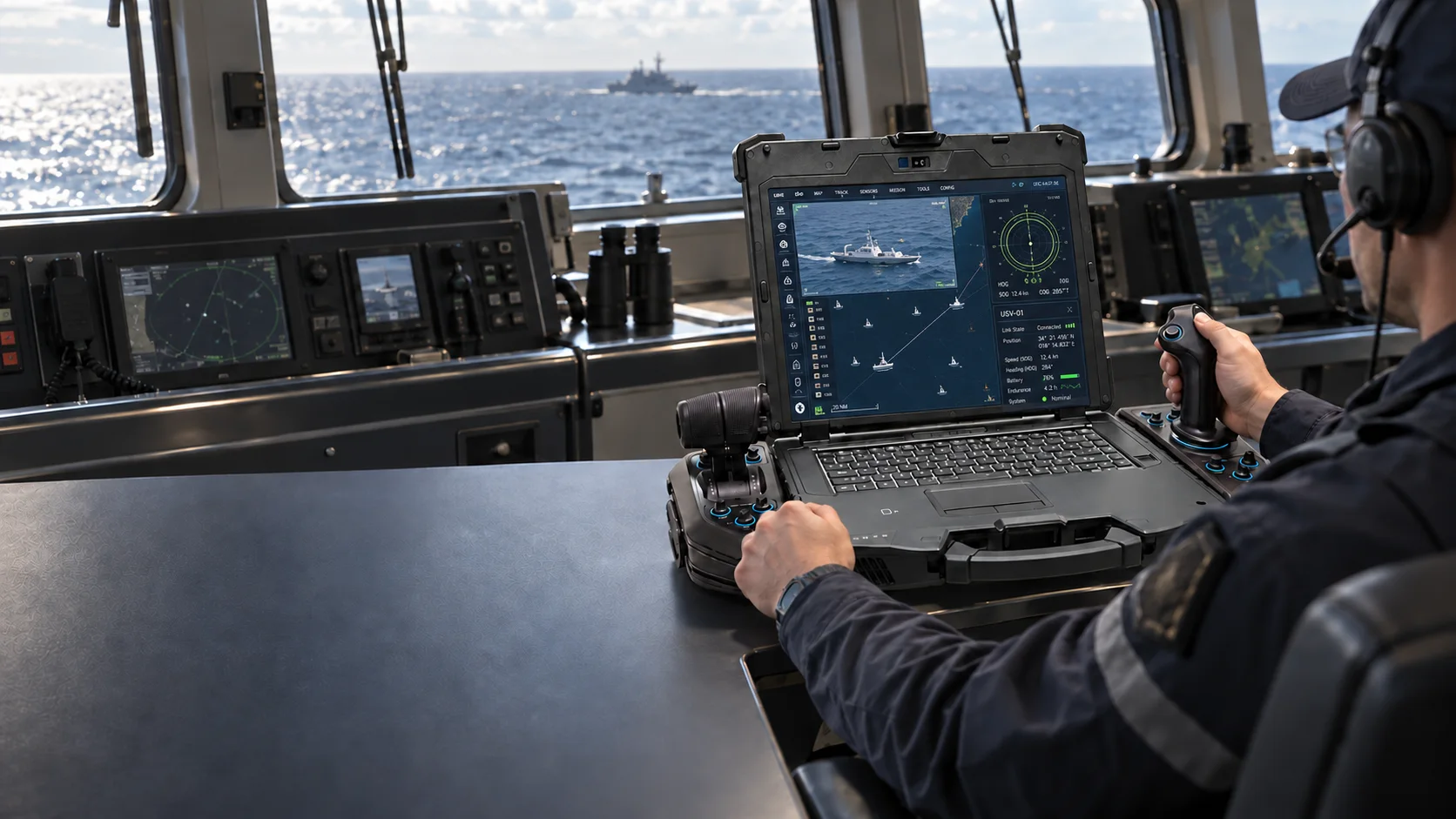
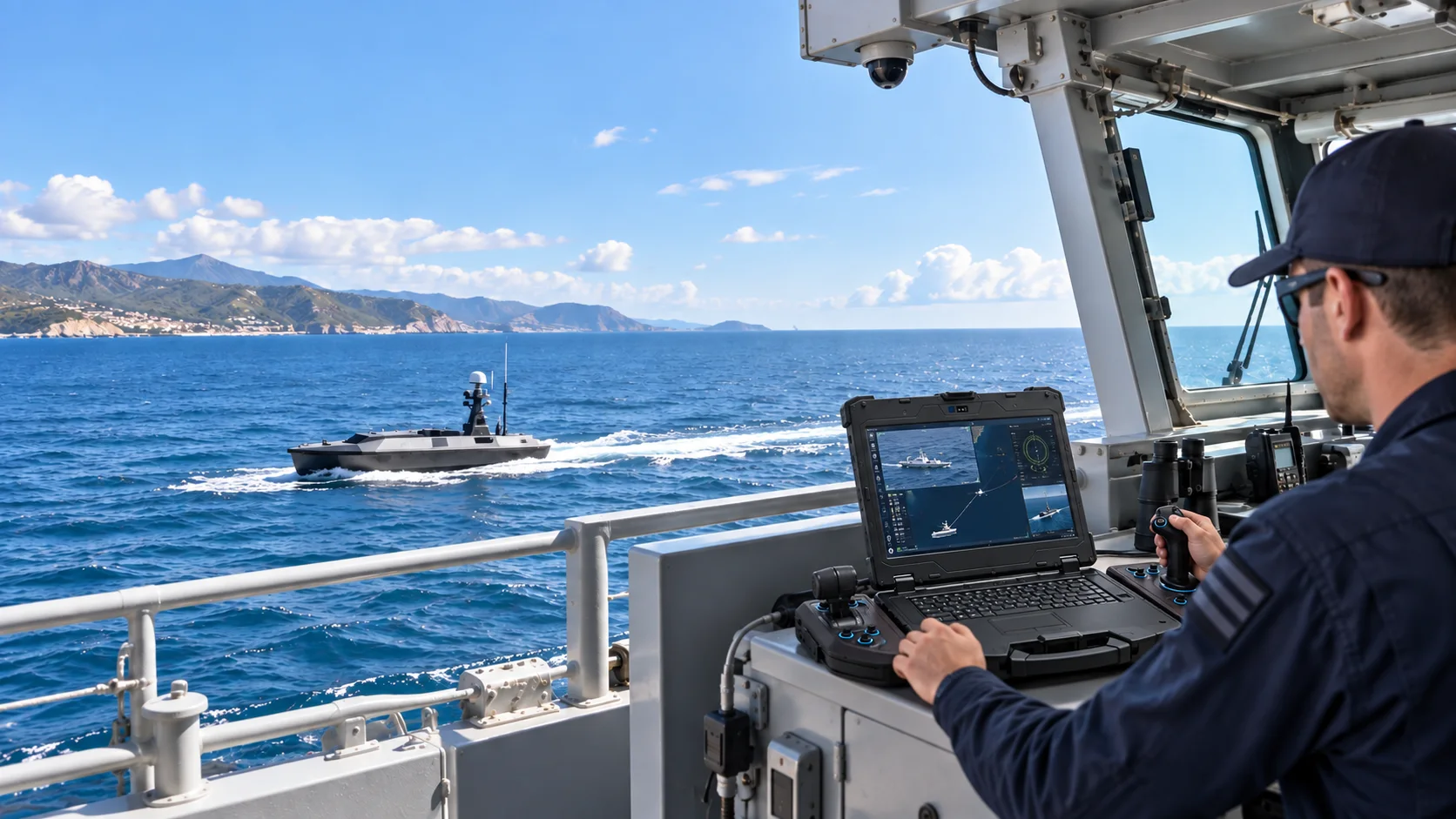
Vessel- and shore-based controllers support unmanned systems used for maritime inspection, monitoring and observation.
Ground control stations support field teams monitoring and controlling unmanned aerial vehicles (UAVs), as well as unmanned ground and maritime systems.
Unmanned systems support incident assessment, remote observation and search-and-rescue operations.
Unmanned inspection supports condition assessment of power lines, pipelines and substations.
Remote inspection and monitoring cover transport routes, communications facilities and ports.
Unmanned systems support inspection of industrial plants, equipment and difficult-access areas.
Drone ground control stations support progress monitoring across construction sites.
Unmanned systems support site mapping, stockpile assessment and equipment inspection in remote resource operations.
Vessel- and shore-based controllers support unmanned systems used for maritime inspection, monitoring and observation.
START WITH THE REQUIREMENT
Enable JavaScript to build a requirements summary, or contact Durabook.
START THE CONVERSATION
Selected visuals on this page are AI-generated for illustrative purposes.