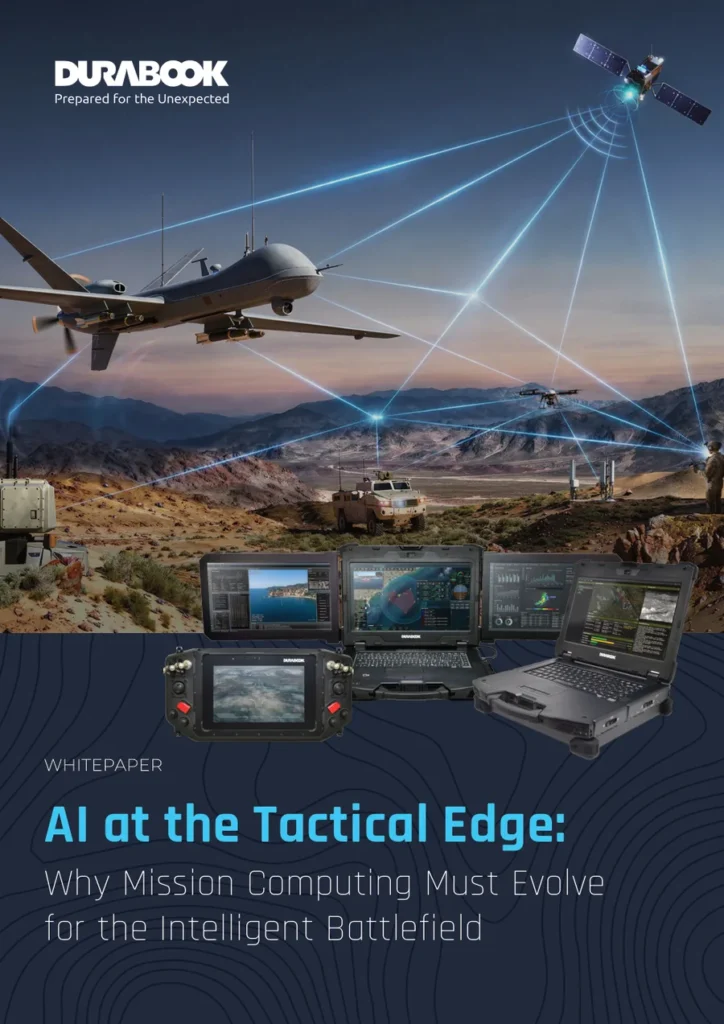
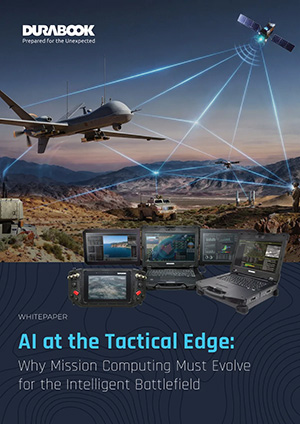
Whitepaper
AI at the Tactical Edge
Why mission computing must evolve for the intelligent battlefield
Satellites, UAVs, ground sensors, electronic warfare systems and connected personnel now generate more operational data than units can send back for central processing. Advantage increasingly depends on how quickly that information becomes action.
AI speeds up analysis and reduces the load on personnel, from object detection and sensor fusion to autonomous navigation and real-time decision support. It only helps if the intelligence is available where and when it’s needed. In contested environments, where communications may be disconnected, intermittent or limited, cloud-only processing adds latency, uses scarce bandwidth and can fail when connectivity is denied.
This whitepaper from Durabook’s defense team sets out five requirements that mission computing now has to meet, and shows how control, compute and command platforms can work together across one mission.
Why DDIL environments change where AI runs
DDIL describes the communications conditions units should expect in contested operations. In a DDIL environment, a link to remote cloud infrastructure can’t be relied on. AI that depends on that link can stall at the moment it’s needed. Keeping inference, sensor fusion and analytics running on rugged computers in the field, close to where data is collected, keeps intelligence available when the network isn’t.
Five requirements for AI‑enabled mission computing
Ruggedness is still the starting point. The AI-enabled battlefield adds four more demands.
Survivability in the harshest environments
Extreme temperatures, shock, vibration, dust, moisture and long deployments are everyday conditions for military technology. What changes with AI is the cost of failure. A field device may now be processing live sensor feeds, supporting autonomous systems or delivering intelligence that immediate decisions depend on. Rugged edge platforms have to combine serious computing power with the ability to keep working under unpredictable conditions, so AI can move out of controlled data centers and into the field.
Continuous availability when every second matters
Tactical operations can’t pause because a battery needs charging, a link drops or a device needs maintenance. AI-enabled platforms may be supporting ground control stations, command vehicles, intelligence teams and autonomous assets for long periods. The whitepaper looks at four factors behind operational continuity.
High-performance AI moves to the edge
Cloud computing still matters for model training, historical analysis and strategic planning. In the field, though, sending large volumes of sensor data to remote infrastructure adds latency, consumes bandwidth and creates operational risk. Edge AI reverses that model. Video, sensor and operational data are analyzed close to where they’re generated, so inference, computer vision, sensor fusion and real-time analytics keep running in DDIL conditions.
Secure connectivity and open integration
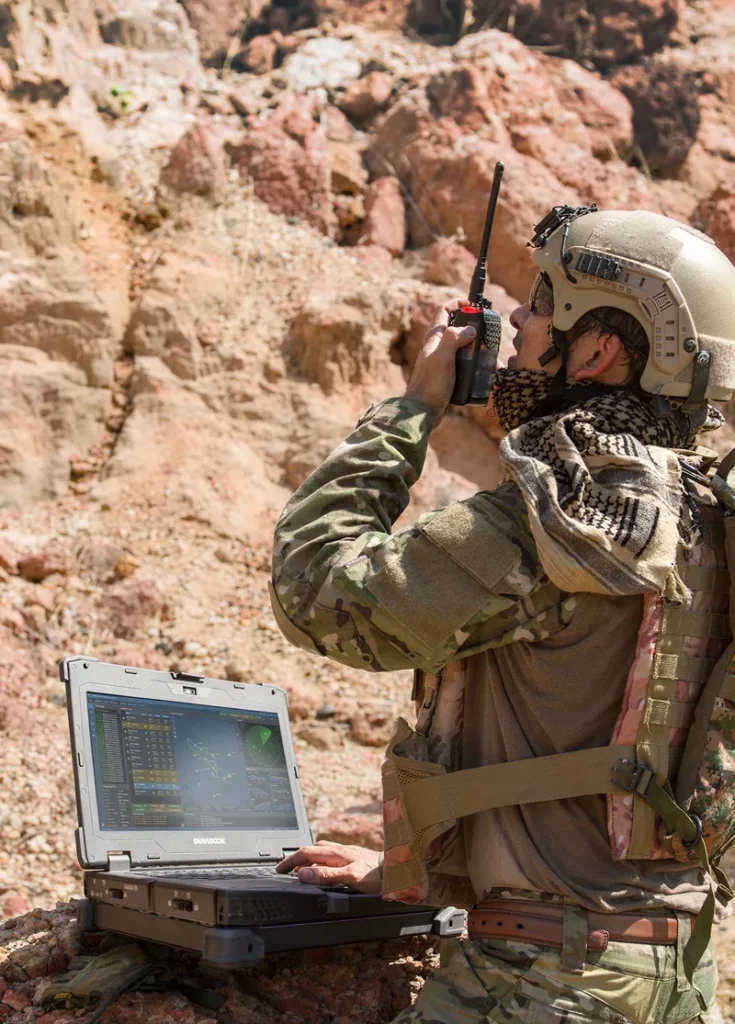
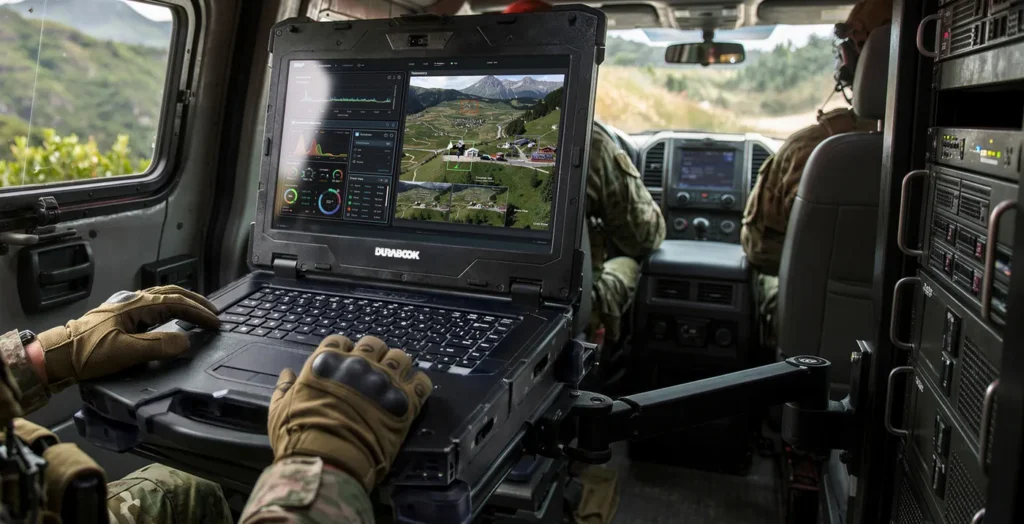
No device works alone on the modern battlefield. Mission computers sit in a wider C4ISR ecosystem of tactical radios, sensors, UAVs and UGVs, command-and-control applications, mapping systems and secure networks. Open architectures and modular integration let defense organizations add new technology without rebuilding the mission environment, and reduce dependence on proprietary systems.
Processing sensitive data locally reduces how much has to be transmitted, and keeps operations running when external networks go down.
Human-centered design for faster decisions
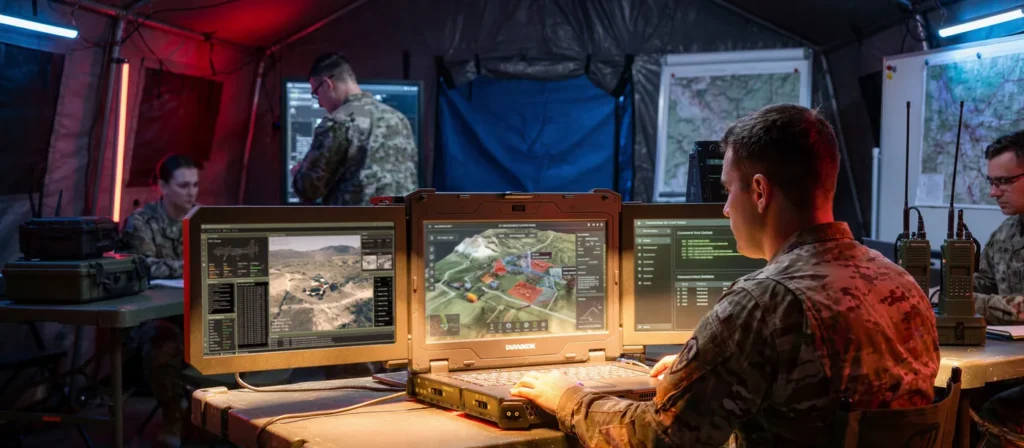
AI is good at processing large volumes of information, spotting patterns and ranking what needs attention. The operator still supplies the context, experience and judgment to act on it. As information grows, how intelligence is presented matters more. A multi-screen workspace can bring mapping, live video, AI-generated intelligence and communications into one view, so commanders can focus where it counts. The decision stays with people.
One mission, three platforms
Control. Compute.
Understand. Decide.
Different platforms play complementary roles across a mission. The whitepaper shows how three Durabook systems connect sensors, autonomous systems, AI and human decision-makers at the tactical edge.
Collect
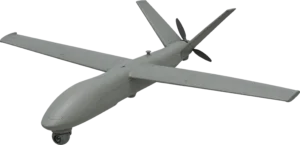
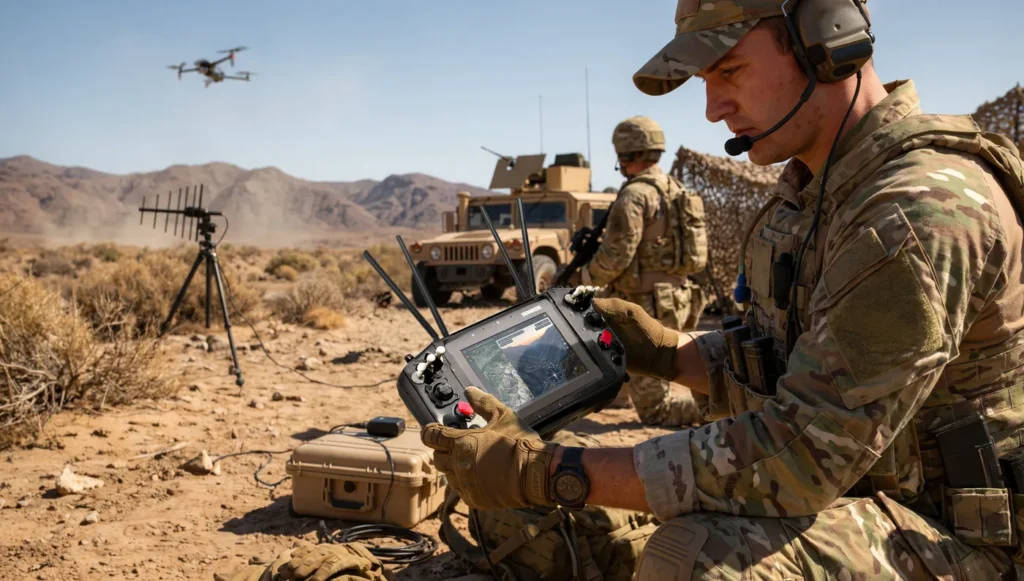
UAVs and sensors
Video, EO/IR, radar and other sensor data from the mission area.
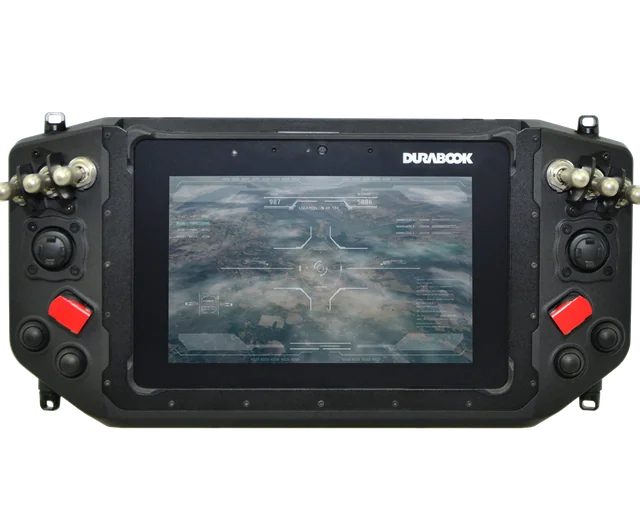
Compute & analyze
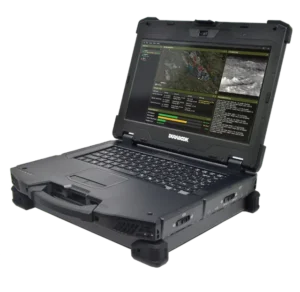
Z14I-HG rugged mobile workstation
Runs demanding Edge AI workloads close to the point of operation, on Intel® Core™ Ultra processors and NVIDIA RTX™ professional graphics.
Understand & decide
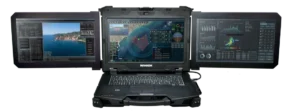
Z14I-DX3 triple-screen rugged laptop
Presents live UAV video, mapping with AI threat overlays and C2 applications side by side.
In the full whitepaper
What you’ll get in the PDF
- An ISR mission walkthrough: how UAV, EO/IR, radar and LiDAR data can become actionable intelligence at the tactical edge instead of being sent back for processing
- A mobile tactical command center scenario: processing live feeds locally and presenting synchronized views to commanders when cloud connectivity is unavailable
- The four availability factors in more detail: power, expansion, docking and lifecycle
- Connectivity and security considerations for mission computers in a wider tactical ecosystem
- The Control, Compute, Understand, Decide model across ISR, Counter-UAS and autonomous operations
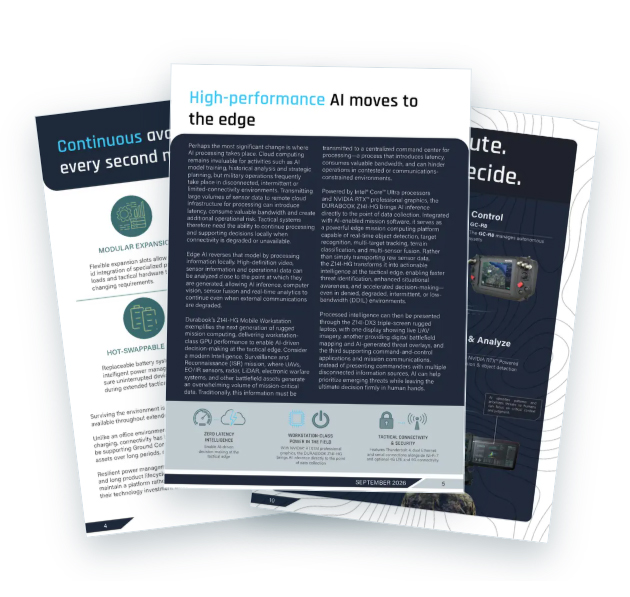
Download the whitepaper
Selected visual content on this page may be generated or modified using AI and is provided for illustrative purposes.